By Viraj • September 4, 2026
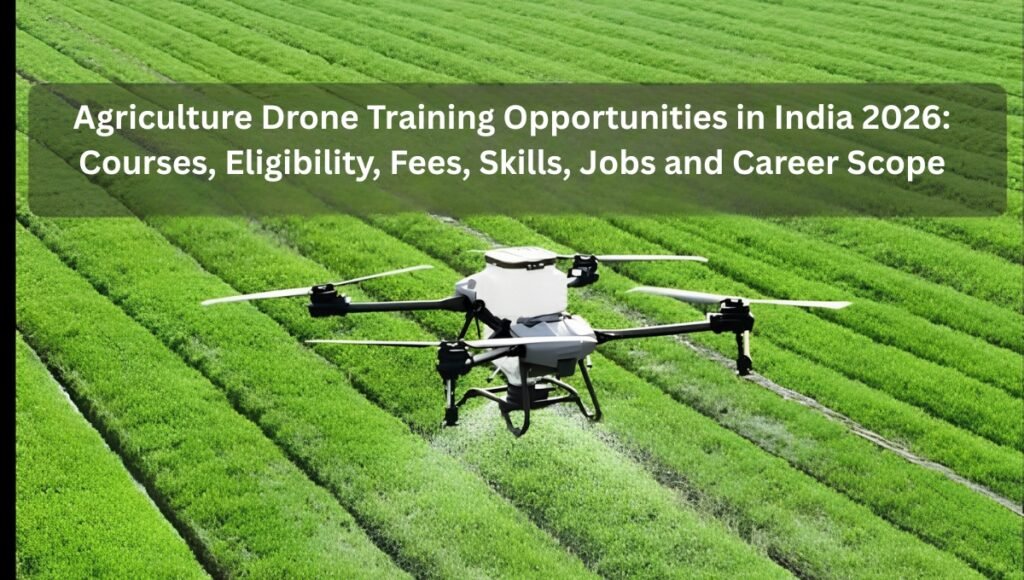
Agriculture Drone Training Opportunities in India: Agriculture has always been close to the heart of India. Millions of families depend on farming, and every improvement in the way crops are grown can make a real difference to farmers, businesses and the country’s food system. Now, a new technology is quietly changing the way many agricultural activities are planned and carried out: drones.
What once looked like an expensive gadget is increasingly becoming a practical agricultural tool. Drones can capture aerial images of farmland, monitor crop conditions, collect valuable field information and, where permitted and operated according to applicable rules, support agricultural spraying. This has created a completely new opportunity for people who want to build careers at the intersection of agriculture and technology.
That is where agriculture drone training comes in.
You do not necessarily have to be an engineer or an experienced pilot to become interested in this field. Students, agriculture graduates, drone enthusiasts, field technicians and working professionals can all explore different training pathways depending on their career goals and the applicable regulatory requirements.
The opportunity is also supported by India’s growing drone ecosystem. A Government of India backgrounder published in February 2026 reported more than 38,500 registered drones and 39,890 DGCA-certified remote pilots, along with 244 approved training organisations at that point. The government has also highlighted the use of drones in agriculture and initiatives designed to increase access to drone technology among women self-help groups.
For someone looking at a future-focused career, this combination of agriculture, aviation and technology can be extremely interesting.
But before joining a course, it is important to understand what agriculture drone training actually involves, which certifications matter, what skills you need, how much training may cost, where jobs are available and what the future could look like.
Agriculture drone training is specialised education that teaches people how to use drones for agricultural applications. The training can include two different sides of the profession. The first is drone operation, where students learn how to safely fly and manage an unmanned aircraft. The second is agricultural application, where learners understand how drone technology can be used for crop monitoring, field mapping, spraying and other farming-related activities.
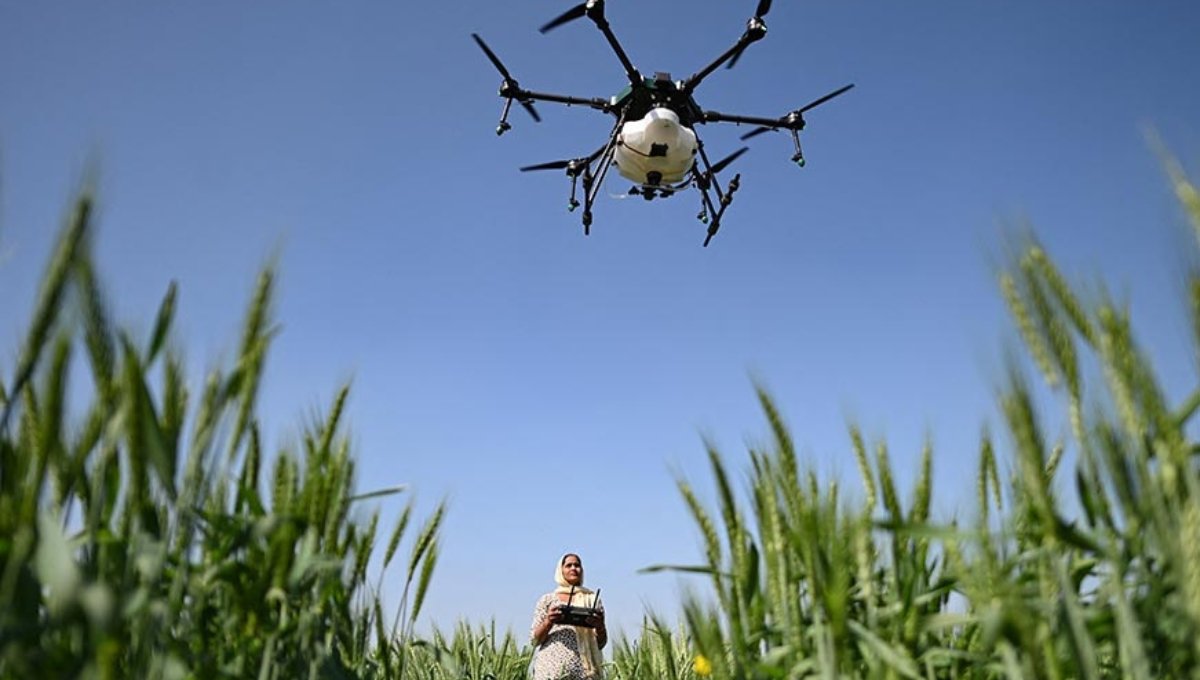
A professional agriculture drone operator therefore needs more than flying skills. They should understand the equipment, batteries, flight planning, weather conditions, safety procedures and applicable drone regulations. Depending on the role, they may also need knowledge of crops, pesticides, fertilisers, field conditions, mapping software and data interpretation.
The exact training and certification required depends on the drone category and operation. Anyone planning professional operations should verify the latest DGCA requirements and applicable agricultural rules before beginning work.
Traditional agricultural operations can require significant time, labour and physical effort, especially when large fields are involved.
Drones can provide an aerial perspective that is difficult to achieve from the ground. They can cover farmland efficiently, capture images and help identify variations that may not be obvious during a normal field inspection.
In suitable applications, drones can also support precision spraying, helping operators target particular areas rather than treating an entire field in exactly the same way.
Government initiatives have helped demonstrate the scale of agricultural drone adoption. The Government of India has highlighted the use of drones for agricultural applications and reported that Namo Drone Didi is providing drones to women self-help groups to support agricultural services and create additional income opportunities.
This means the agricultural drone sector is not simply about technology companies. It is increasingly connected with farmers, rural entrepreneurship, cooperatives, service providers and government-supported programs.
| Factor | Details |
|---|---|
| Career Area | Agriculture + Drone Technology |
| Main Skill | Safe professional drone operation |
| Applications | Monitoring, mapping, spraying and data collection |
| Suitable Candidates | Students, agriculture professionals, pilots and technicians |
| Training | Theory + practical flying + application knowledge |
| Important Technical Skills | Flight planning, batteries, payloads and equipment |
| Additional Skills | GIS, crop knowledge, data analysis |
| Certification | Depends on applicable drone operation and DGCA pathway |
| Work Environment | Farms, agricultural fields, companies and service operations |
| Career Potential | Pilot, field operator, technician, survey/data roles |
Eligibility varies according to the course and the regulatory requirements associated with the intended operation.
A general agricultural drone workshop may have relatively simple admission requirements, while a professional remote-pilot training pathway can have specific eligibility conditions.
Historically, India’s Drone Rules framework specified minimum age and education requirements for remote pilots. However, regulations can change, so candidates should verify the latest DGCA requirements before registering.
| Candidate | Potential Advantage |
|---|---|
| Agriculture Student | Understands crops and farm practices |
| Agriculture Graduate | Can combine farming knowledge with drone technology |
| Engineering Student | Strong technical foundation |
| GIS Professional | Can work with mapping and aerial data |
| Existing Drone Pilot | Already has flight experience |
| Farmer/Agri Entrepreneur | Can use drones as a business service |
| Field Technician | Can develop equipment and maintenance skills |
The most important thing is to choose training that matches your intended role.
A well-designed course should cover both drone operations and agricultural applications.
On the drone side, students may learn about aircraft components, batteries, controllers, flight planning, safety, weather, airspace and emergency procedures.
On the agriculture side, training can introduce crop monitoring, field mapping, spraying systems, payload management and agricultural workflows.
The training may also include practical exercises where students learn how to prepare the drone, inspect equipment, plan a mission, operate the aircraft and safely complete the operation.
If spraying is part of the course, additional attention should be given to the safe handling and application of agricultural inputs and to all applicable legal and operational requirements.
| Training Subject | Importance |
|---|---|
| Drone Fundamentals | Understand aircraft components |
| Flight Operations | Develop controlled flying ability |
| Airspace | Understand where operations are permitted |
| Weather | Identify suitable and unsafe conditions |
| Battery Management | Prevent operational failures |
| Risk Assessment | Plan safer missions |
| Emergency Procedures | Respond to unexpected situations |
| Payload Management | Handle cameras or spraying equipment |
| Crop Monitoring | Understand agricultural applications |
| Field Mapping | Capture useful aerial information |
| Spraying Operations | Learn controlled agricultural application |
| Equipment Maintenance | Keep drones operational |
| Data Processing | Convert aerial data into useful information |
If your career goal involves professional drone operations, you should understand the role of DGCA-authorized training.
The Directorate General of Civil Aviation regulates civil aviation in India and maintains an approved ecosystem of Remote Pilot Training Organisations, or RPTOs.
DGCA’s published training material includes subjects such as air law, Drone Rules, airspace, principles of flight, meteorology, risk assessment, emergency procedures, maintenance and payload operations.
An agriculture-focused learner should therefore avoid assuming that a short private workshop automatically provides the same regulatory qualification as an authorized remote-pilot training pathway.
Before admission, check the institute’s current authorization, approved scope and the exact credential issued after successful completion.
Course duration depends on the training provider, certification pathway, drone category and specialization.
A basic awareness workshop can be very short, while professional remote-pilot training includes structured theory and practical flying. An agriculture specialization may require additional field-based training.
There is therefore no single duration that applies to every agriculture drone course in India.
| Course Type | Training Nature |
|---|---|
| Basic Agricultural Drone Workshop | Introduction and demonstration |
| Remote Pilot Training | Theory + practical flight |
| Agriculture Drone Operator Course | Flight + agricultural applications |
| Drone Spraying Training | Flight + spraying procedures |
| Drone Mapping Course | Flight + mapping and data |
| Advanced Agri-Tech Course | Drone + agriculture + data |
When comparing courses, focus on what you learn rather than choosing solely based on the number of days.
Fees vary considerably.
Factors such as the training organization, course duration, number of practical sessions, equipment, location, accommodation and certification can affect the final cost.
A short introductory course may cost much less than professional training involving aircraft, instructors, flying grounds and practical assessments.
| Cost Component | What to Ask |
|---|---|
| Tuition | What is the complete course fee? |
| Practical Training | How much actual flying is included? |
| Equipment | Are drones provided? |
| Certification | What credential is included? |
| Examination | Is the assessment fee separate? |
| Accommodation | Is lodging available? |
| Food | Is food included? |
| Travel | Is transport to the field included? |
| Additional Training | Are extra flying sessions charged separately? |
Never select an institute simply because its fee is the lowest.
At the same time, an expensive course does not automatically guarantee better training. Compare the actual learning experience.
Agriculture drone training should not remain limited to classroom theory.
Flying in a real agricultural environment introduces challenges that cannot always be understood through a presentation.
Students should ideally learn how to inspect the drone before take-off, assess the field, plan the flight, manage the battery, operate the payload and respond to unexpected situations.
If spraying is involved, the pilot must also understand the equipment and safe operating procedures.
This is why you should ask every training provider exactly how much practical flying time each student receives.
A class with 25 students and one drone may look impressive on paper but provide very little individual experience.
Agriculture drones can support several types of work.
One major application is crop monitoring. A drone can capture aerial images that help identify variations in crop growth, field conditions and potential problem areas.
Field mapping is another useful application. Aerial imagery can help create maps and provide a clearer understanding of field boundaries and conditions.
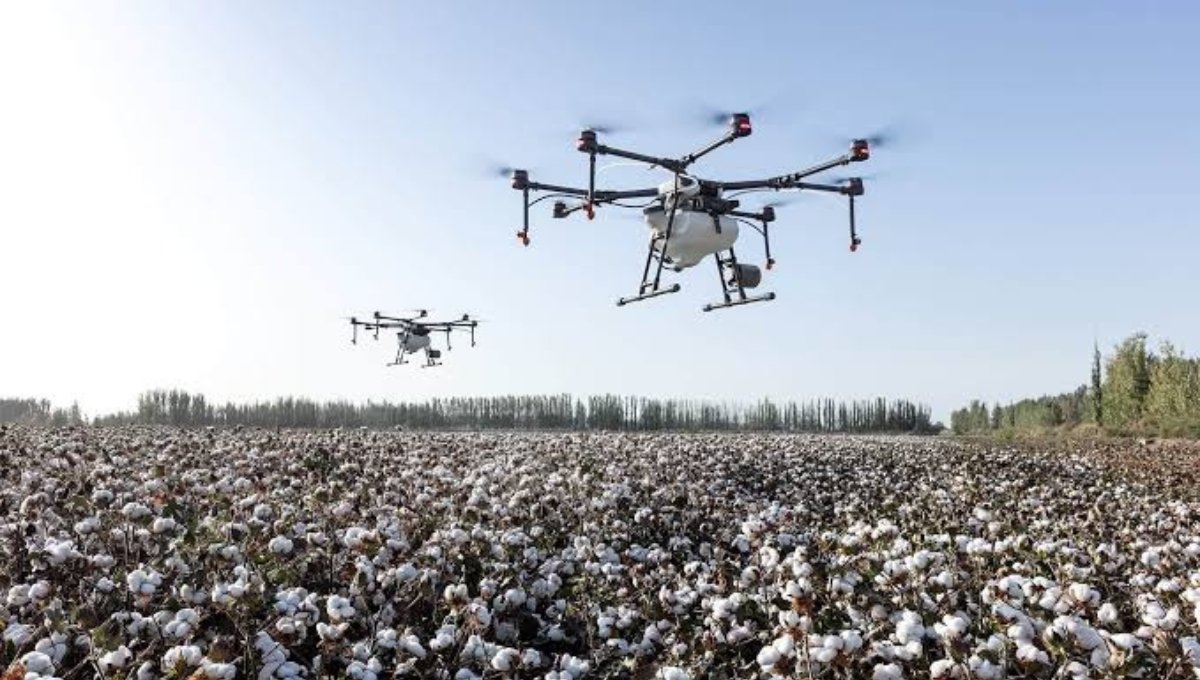
Precision spraying is perhaps the most visible agricultural application. Where the operation is legally permitted and the required procedures are followed, drones can be used to apply agricultural inputs over fields.
Drones can also support irrigation assessment, crop scouting and documentation, depending on the equipment and software used.
A successful agriculture drone professional should develop a combination of technical, agricultural and practical skills.
Flying is the foundation, but it is only the beginning.
Understanding crop cycles can help you recognize what you are seeing in the field. Knowledge of weather can help you decide when flying is appropriate. Basic equipment maintenance can prevent avoidable failures.
For data-oriented roles, GIS, mapping, image processing and data analysis can significantly increase your career options.
The agriculture drone sector offers several possible career directions.
A trained person can work as an agricultural drone pilot, field operator, drone technician, crop-monitoring specialist, mapping operator or agricultural drone service provider.
Some people may also choose entrepreneurship by offering drone services to farmers, agricultural companies, cooperatives and other clients, subject to all applicable regulations.
| Job Role | Main Responsibility |
|---|---|
| Agriculture Drone Pilot | Operate drones in agricultural fields |
| Agri-drone Operator | Manage complete field operations |
| Crop Monitoring Specialist | Capture and assess crop imagery |
| Drone Spraying Operator | Conduct permitted spraying operations |
| Agricultural Mapping Specialist | Create aerial field maps |
| Drone Technician | Maintain and repair equipment |
| GIS/Drone Data Specialist | Process aerial data |
| Agri Drone Entrepreneur | Provide drone-based farm services |
The best opportunities may go to professionals who understand both technology and agriculture.
There is no fixed national salary for agriculture drone pilots.
Income depends on experience, employer, location, specialization, type of drone, project size and the nature of the work.
Beginners may start in junior field positions. Experienced operators can move into specialized roles involving mapping, spraying, data analysis or operations management.
Freelancers and business owners have a different income model because they may charge customers per acre, project, day or service, depending on the business structure and applicable regulations.
| Career Stage | Possible Role | Income Potential |
|---|---|---|
| Beginner | Trainee/Junior Pilot | Entry-level |
| Early Career | Agriculture Drone Operator | Growing with experience |
| Experienced | Senior Pilot/Specialist | Higher potential |
| Specialist | Mapping/Data/Inspection Professional | Specialized compensation |
| Entrepreneur | Drone Service Provider | Project/business dependent |
Salary information available online should be treated as indicative rather than guaranteed.
For people with an entrepreneurial mindset, agriculture drone services can be an interesting opportunity.
Instead of working as an employee, you can potentially provide services to farmers and agricultural organizations.
However, starting a drone business involves more than purchasing a drone.
You need to understand applicable regulations, equipment maintenance, insurance considerations, travel costs, battery management, client acquisition and operational safety.
You also need to understand the economics of your service. If you charge farmers for spraying or mapping, your pricing needs to account for fuel or travel, labour, equipment depreciation, maintenance, battery replacement, software and other costs.
A business becomes successful when it delivers measurable value to customers, not simply because the technology looks impressive.
Agricultural drone technology has strong links with rural development.
Government initiatives such as Namo Drone Didi are designed to expand drone access through women self-help groups and create opportunities for agricultural services and income generation. The Government of India has described drones as a technology with potential to improve agricultural efficiency and productivity.
This creates an interesting possibility for rural entrepreneurs and agricultural graduates.
Instead of moving to a large city for every technology-related career opportunity, some trained professionals may be able to build businesses closer to farming communities.
The agricultural drone sector also offers opportunities for women, particularly through initiatives aimed at rural self-help groups. Namo Drone Didi is a notable example. Under the scheme, selected women self-help groups are supported with drone-related resources and training to provide agricultural services. The Government of India has highlighted the initiative as a way to bring technology into agriculture while creating income opportunities for women in rural communities. This shows that agricultural drone careers are not limited to traditional technology professionals.
Choosing the right institute is extremely important. First, check whether the organisation is currently authorised by DGCA for the relevant remote-pilot training, if your intended certification requires an authorised RPTO. Then examine the practical training arrangement. Ask how many drones are available, how many students are in each batch and how much flying time each student receives.
You should also examine the agricultural component. If the course claims to teach spraying, ask what equipment is used and how safety and regulatory requirements are addressed.
| Selection Factor | Importance |
|---|---|
| Current Authorization | Very High |
| Practical Flying | Very High |
| Instructor Experience | Very High |
| Agriculture Knowledge | Very High |
| Equipment Quality | High |
| Flying Ground | High |
| Safety Training | Very High |
| Course Syllabus | High |
| Certification Clarity | Very High |
| Fees | High |
| Placement Support | Medium |
| Alumni Feedback | Medium |
Never choose an institute solely because it promises a high salary or guaranteed employment.
The future of agricultural drones could become increasingly connected with precision farming and data. Today’s drones can already collect aerial images and support specific agricultural operations. As sensors, software and artificial intelligence become more advanced, the amount of useful information that can be extracted from aerial imagery may increase.
This could create demand for professionals who understand more than flying. The future agriculture drone professional may need to understand crop science, GIS, sensors, data analytics, AI-assisted image interpretation and field operations. That is why continuous learning will be important.
If you are starting from scratch, begin by learning the basics of drone technology and understanding the applicable regulations. Next, choose your career direction. Decide whether you are more interested in crop monitoring, spraying, mapping, surveying, data analysis or drone entrepreneurship. Then choose appropriate professional training and verify the current authorisation and certification pathway.
Once trained, spend time developing practical field experience. Work with agricultural professionals whenever possible so that you understand how your drone services fit into actual farming operations. Finally, add complementary skills such as GIS, crop monitoring, mapping or data processing. This combination can help you become more than just a drone pilot.
Disclaimer: This article is intended for general educational and career-planning purposes only. Drone regulations, Remote Pilot Certificate requirements, eligibility criteria, agricultural spraying rules, training requirements, approved training organisations, and operational procedures can change. Readers should verify the latest requirements directly with DGCA, the relevant agricultural authorities and the applicable state or local authorities before enrolling in a course or conducting agricultural drone operations. Course fees, salaries, business income and career opportunities are indicative and can vary significantly depending on location, experience, specialisation, employer, equipment and market conditions. Completing an agricultural drone training course does not guarantee employment, a particular salary or business success.