By Viraj • September 5, 2026
FPV Drone Course for Beginners in India: There is something completely different about flying an FPV drone. Instead of simply watching a drone from the ground, you see the world almost from the drone’s perspective. The feeling of moving through the air, diving between obstacles and capturing fast, cinematic footage can be incredibly exciting. For many beginners, that first FPV flight is the moment when a hobby starts feeling like something much bigger.
FPV, or First-Person View, drones have become increasingly popular among racing enthusiasts, content creators, filmmakers, photographers and technology lovers. Unlike conventional camera drones that are often designed around stability and automated flight features, FPV drones are built around speed, agility and an immersive flying experience.
The good news is that you do not have to be an expert to start learning FPV. A properly structured beginner course can help you understand the equipment, learn simulator controls, develop basic flying skills and gradually move toward real-world flight.
However, there is an important point that every beginner in India should understand. An FPV flying course and DGCA-authorized remote-pilot training are not automatically the same thing. Some institutes offer FPV racing or freestyle training as a specialised skill course, while DGCA-authorized remote-pilot training follows the applicable regulatory framework. For example, the Telangana State Aviation Academy’s Drone Academy separately lists FPV Drone Pilot Training alongside its DGCA-approved drone pilot training programs.
So, if you are thinking about joining an FPV drone course, this guide will help you understand what FPV means, what beginners learn, how much courses may cost, what equipment you need, how long training can take and how you can turn the skill into a career.
FPV stands for First-Person View. An FPV system allows the pilot to see the live video feed from a camera mounted on the drone, usually through FPV goggles or another compatible display. This creates an immersive experience where the pilot feels as though they are sitting inside the drone.
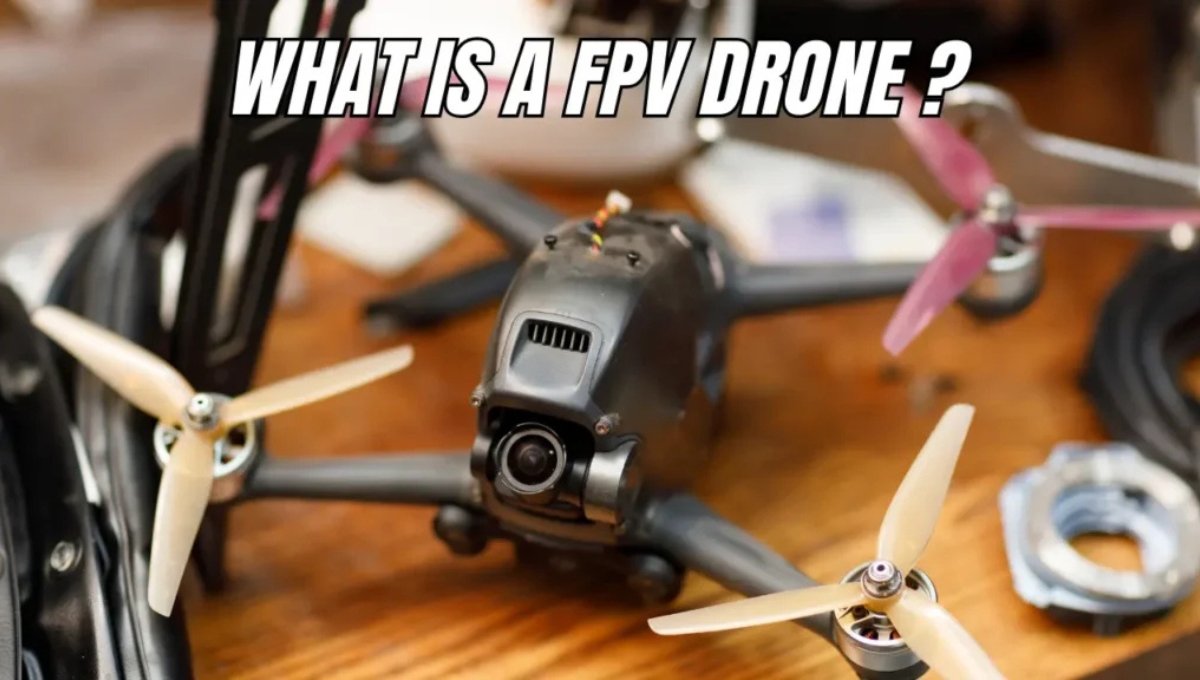
FPV drones are commonly associated with racing and freestyle flying, but their applications have expanded considerably. Today, FPV systems are also used for cinematic filmmaking, real-estate videos, tourism content, sports coverage and other creative projects. An FPV drone can move quickly and change direction rapidly, which makes it capable of producing dynamic footage that is difficult to achieve with many conventional camera drones.
| Course Factor | Beginner-Level Details |
|---|---|
| Full Form | First-Person View |
| Main Focus | Immersive drone flying |
| Suitable For | Beginners, hobbyists, creators and aspiring professionals |
| Training Style | Theory, simulator and practical flying |
| Common Specializations | Racing, freestyle and cinematic FPV |
| Beginner Requirement | Basic interest in drones and willingness to practice |
| Important Equipment | Drone, transmitter, goggles and batteries |
| Useful Skill | Manual flight control |
| Additional Skills | Camera work, editing and drone maintenance |
| Career Areas | Filmmaking, content creation, racing and specialised drone work |
Traditional drones often make flying look incredibly easy. GPS stabilisation, obstacle sensing and automated flight modes can help new pilots control the aircraft. FPV flying can be different.
It teaches you to develop a much stronger understanding of movement, orientation, speed and control. As your skills improve, you can perform turns, dives, rolls and other manoeuvres. This learning process can be challenging, but that is also what makes FPV so rewarding.
For beginners, an FPV course can reduce the frustration of trying to learn everything alone. Instead of repeatedly crashing a drone and wondering what went wrong, you can learn under supervision and understand the principles behind each manoeuvre.
A good beginner course should start with the basics rather than immediately pushing students into complicated stunts. You first become familiar with the drone, transmitter, FPV goggles, batteries and other components. You learn what each control does and how the aircraft responds.
Simulator training is particularly useful at this stage. It allows beginners to practice without risking an expensive drone. Once you become comfortable with the controls, the training can progress toward real flying.
A structured program may cover line-of-sight flying, basic FPV operation, orientation, turns, throttle control, braking, landing and eventually more advanced manoeuvres. One current Indian training provider, for example, lists a three-day beginner FPV course covering racing and freestyle, with simulator flying, line-of-sight practice and a basic FPV kit included.
| Topic | What You Learn |
|---|---|
| FPV Basics | Understanding the FPV system |
| Drone Components | Motors, ESC, flight controller and camera |
| Transmitter Controls | Throttle, pitch, roll and yaw |
| Simulator Training | Practice without crash risk |
| Line-of-Sight Flying | Basic visual aircraft control |
| FPV Goggles | Understanding live video feed |
| Battery Management | Safe battery handling |
| Flight Practice | Controlled real-world flying |
| Basic Troubleshooting | Identifying common problems |
| Safety | Responsible flight practices |
| Racing Basics | Speed and track control |
| Freestyle Basics | Manoeuvres and aerial movement |
If you are completely new to FPV, a simulator can save you a lot of money and frustration. An FPV simulator lets you practice using a controller while the software recreates drone movement on a computer. You can crash hundreds of times without physically damaging the aircraft. That may sound funny, but crashing is genuinely part of the learning process.
Beginners need time to build muscle memory. Your fingers gradually learn how much throttle or directional input is required for a particular movement. A good instructor should therefore encourage simulator practice before expecting a beginner to perform difficult manoeuvres on a real drone.
You do not need the most expensive equipment to start learning. A basic FPV setup normally consists of the drone itself, a radio transmitter, FPV goggles or display, batteries and a charger.
Some courses provide equipment during training, while others expect students to purchase their own setup.
| Equipment | Purpose | Beginner Importance |
|---|---|---|
| FPV Drone | Aircraft used for flying | Essential |
| Radio Transmitter | Controls the drone | Essential |
| FPV Goggles | Displays live camera feed | Essential for immersive FPV |
| Battery | Powers the drone | Essential |
| Battery Charger | Charges batteries safely | Essential |
| Propellers | Provide thrust | Essential spare |
| Spare Parts | Repairs after crashes | Highly useful |
| Simulator | Practice environment | Very useful |
| Toolkit | Maintenance and repairs | Useful |
| Action Camera | High-quality footage | Optional |
You should avoid buying everything immediately. First understand what type of FPV flying you want to pursue.
FPV is not one single style of flying. FPV racing focuses on speed, precision and rapid manoeuvring around a defined course. It requires quick reactions and excellent control. Freestyle FPV is more about creative flying. Pilots perform rolls, dives, flips and other movements while creating visually interesting footage.
Cinematic FPV focuses on camera movement and storytelling. The goal is usually not simply to fly as fast as possible but to create smooth, dramatic and engaging footage.
| FPV Type | Main Objective | Suitable For |
|---|---|---|
| Racing | Speed and precision | Competitive pilots |
| Freestyle | Creative maneuvers | Hobbyists and creators |
| Cinematic | Dynamic video | Filmmakers and content creators |
| Exploration | Immersive flying | Hobbyists |
| Professional FPV | Commercial production | Experienced pilots |
For most beginners, freestyle or cinematic flying can be particularly exciting because you can eventually use the skill to create content.
The duration depends heavily on the institute and the type of course. Beginner workshops may last only a few days. More comprehensive programs can take longer and may include additional technical training.
For example, India Drone Academy currently lists a basic FPV course of three days and an advanced FPV course of five days. Its listed beginner course covers racing and freestyle and includes simulator and basic FPV training.
However, completing a three-day course does not mean you will immediately fly like a professional. The course can give you a foundation. Real skill comes through practice.
Course fees can vary significantly.
The cost depends on the institute, instructor experience, equipment provided, course duration and whether you receive a drone or FPV kit as part of the program.
As one current example, India Drone Academy lists its basic FPV course at ₹25,000 plus 18% GST, while its advanced FPV course is listed at ₹45,000 plus 18% GST. These are examples from one provider, not fixed national prices.
| Course Type | Indicative Fee Range |
|---|---|
| Introductory Workshop | ₹5,000–₹15,000 |
| Beginner FPV Course | ₹15,000–₹30,000 |
| Advanced FPV Course | ₹30,000–₹60,000+ |
| Professional Cinematic Training | ₹30,000–₹1 lakh+ |
| Racing-Focused Training | Varies by institute |
These ranges are only broad market indications. Always check the latest fee directly with the training provider.
This is where beginners need to be particularly careful. An FPV course may be designed specifically to teach racing, freestyle or cinematic flying. That does not automatically mean it is a DGCA-authorized remote-pilot certification course.
DGCA’s published training framework covers remote-pilot training and includes subjects such as air law, airspace, principles of flight, meteorology, aircraft operations, maintenance, risk assessment, emergency procedures and payload operations.
Some institutes separately advertise FPV courses alongside their DGCA-approved remote-pilot programs. Telangana State Aviation Academy, for instance, lists FPV Drone Pilot Training as a separate offering while also operating DGCA-approved remote-pilot training.
Therefore, before admission, ask exactly what the course provides.
If you need a regulatory remote-pilot qualification for your intended professional operation, verify the current DGCA requirements and whether the training organisation is authorised for the relevant training scope.
FPV training can be suitable for many different people. A complete beginner can start with simulator training and basic flight lessons. Photographers and videographers can use FPV to expand their creative capabilities. YouTubers and social-media creators can produce more dynamic content. Engineering and electronics enthusiasts may enjoy building and repairing FPV drones.
Even experienced conventional drone pilots can learn FPV because the flight characteristics and control techniques are different. The important thing is patience. FPV flying has a learning curve, and beginners should not compare their first week of flying with professional pilots who have spent years practising.
The first skill is throttle control. It sounds simple, but controlling altitude smoothly is one of the foundations of FPV flying. You also need to develop orientation awareness, especially when the drone is moving quickly or flying away from you.
Good FPV pilots also learn to anticipate movement rather than reacting after something happens.
Over time, you can develop:
The more you practice, the more natural these movements become.
Crashes are common during FPV learning. That means maintenance is an important part of the hobby and profession. Students should learn how to inspect propellers, motors, batteries, frames and other components. Basic troubleshooting can save both time and money. You do not necessarily need to become an electronics expert immediately, but understanding the basics can make you a more confident pilot. Some specialised drone training programs also offer separate assembly and repair courses, demonstrating how closely flying and technical maintenance can be connected.
FPV can become more than a hobby if you develop professional-level flying and creative skills. The most visible opportunity is cinematic FPV. Filmmakers, production houses, advertising agencies, tourism companies, real-estate businesses and content creators can use dynamic aerial footage.
There are also opportunities in racing, drone content production, training, drone services and specialized commercial operations.
| Career Path | Useful Additional Skills |
|---|---|
| FPV Pilot | Advanced flight control |
| Cinematic FPV Pilot | Camera and filmmaking |
| FPV Videographer | Shooting and composition |
| Drone Content Creator | Editing and storytelling |
| Racing Pilot | Competitive flying |
| FPV Instructor | Teaching and communication |
| Drone Technician | Electronics and repair |
| Drone Service Provider | Business and client management |
The most valuable combination is usually flying + another professional skill.
An FPV pilot who understands filmmaking can be more useful to a production company than someone who only knows how to fly.
There is no fixed salary for FPV pilots. Income depends on experience, reputation, location, specialisation, and the type of projects you handle. A beginner working for a company may start with an entry-level salary, while an experienced cinematic FPV pilot may work on project-based assignments.
Freelancers can charge according to the project, shoot duration, travel, equipment and production requirements.
| Experience | Possible Work |
|---|---|
| Beginner | Assistant/Junior Pilot |
| Developing | FPV Camera Operator |
| Experienced | Cinematic FPV Pilot |
| Advanced | Commercial FPV Specialist |
| Freelance | Project-Based FPV Services |
| Entrepreneur | FPV Production/Drone Service Business |
Do not believe anyone promising a guaranteed salary after a short FPV course. Your income will depend on the quality of your work and the value you can provide.
Choosing an institute requires some research. First, understand what you actually want to learn. If you want racing, choose racing-focused training. If you want filmmaking, look for cinematic FPV experience. Then check the instructor’s background. A good instructor should have genuine flying experience rather than simply theoretical knowledge.
Also ask how much simulator and practical flying time is included.
| Selection Factor | Importance |
|---|---|
| Instructor Experience | Very High |
| Practical Flying | Very High |
| Simulator Training | High |
| Equipment Quality | High |
| Safety Training | Very High |
| Course Syllabus | High |
| Batch Size | High |
| Maintenance Knowledge | Medium to High |
| Camera Training | High for cinematic FPV |
| Certification Clarity | Very High |
| Fees | Medium |
| Student Reviews | Medium |
If the course claims to provide DGCA-related certification, verify the organization’s current authorisation and applicable scope through official DGCA information before paying.
The biggest mistake is buying an expensive FPV drone before learning how to fly. Another mistake is skipping simulator training because it feels less exciting than real flying. Beginners should also avoid immediately attempting complicated flips, dives or high-speed manoeuvres. Safety should always come first.
Another common mistake is assuming that a course certificate automatically makes someone a professional pilot. A certificate can show that you completed training. It cannot replace experience.
Start with basic drone concepts and understand how the controller works. Move to a simulator and practice throttle control, turning, hovering and orientation. Once you are comfortable, begin supervised real-world flying with beginner-friendly equipment.
After mastering basic flight, start learning freestyle or cinematic techniques depending on your goal. Then add another skill such as filmmaking, photography, editing, drone repair or content creation. Finally, build a portfolio. Record your best flights and create a collection of professional-looking footage. That portfolio can become extremely important if you want to find clients or apply for jobs.
Disclaimer: This article is intended for general educational and career-planning purposes only. FPV drone training, drone registration, remote pilot certification, operational permissions, airspace requirements, and other aviation regulations may change over time. An FPV racing, freestyle or cinematic course is not automatically equivalent to DGCA-authorized remote-pilot training or a regulatory certification. Readers intending to operate drones professionally in India should verify the latest DGCA rules, applicable category requirements, authorised training organisations and operational restrictions through official sources before enrolling in a course or conducting any commercial flight. Course fees, duration, salary figures and career opportunities mentioned in this article are indicative and can vary by institute, location, experience, specialisation, and market conditions. Completing an FPV course does not guarantee employment, income or commercial success.