By Viraj • September 5, 2026
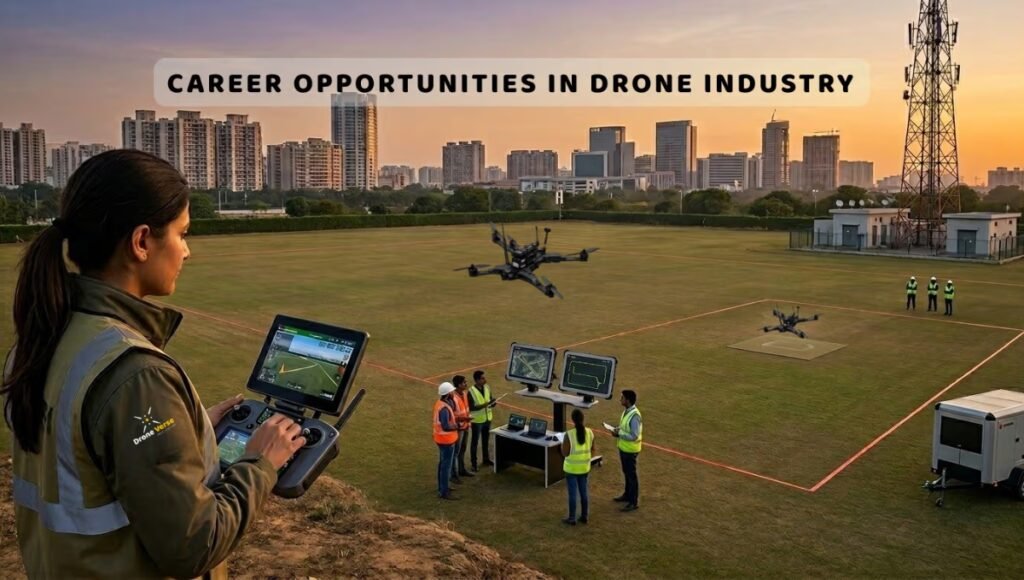
Career Opportunities for Drone Pilots in India: There was a time when flying a drone was simply a hobby. People bought small drones to capture beautiful aerial photographs, record travel videos or have some fun in the open sky. Today, things have changed dramatically. A drone can now be a professional tool, and the person controlling it can build a real career around it.
India’s drone industry is growing across agriculture, surveying, construction, infrastructure inspection, filmmaking, disaster management, logistics and several government projects. This growth is creating opportunities not only for drone pilots but also for people who understand mapping, data processing, maintenance, sensors and industry-specific applications.
According to the Government of India’s February 2026 data, India had more than 38,500 registered drones, 39,890 DGCA-certified remote pilots and 244 approved training organisations. Drones were already being used for village mapping, agriculture, infrastructure monitoring, railway inspection and disaster response.
This means that becoming a drone pilot is no longer just about learning how to take off and land a drone. The real opportunity lies in learning how to use drones to solve practical problems.
If you are a student, working professional, aviation enthusiast or someone looking for a technology-driven career, drone piloting can be an interesting field to explore. Let’s understand the career opportunities, qualifications, salary, skills and future scope in detail.
A drone pilot, also known as a remote pilot in the professional ecosystem, is responsible for operating an unmanned aircraft system from the ground. Depending on the job, the pilot may control the drone manually, operate an automated flight mission, manage payloads, monitor flight conditions and ensure that the operation is conducted safely and according to applicable regulations.
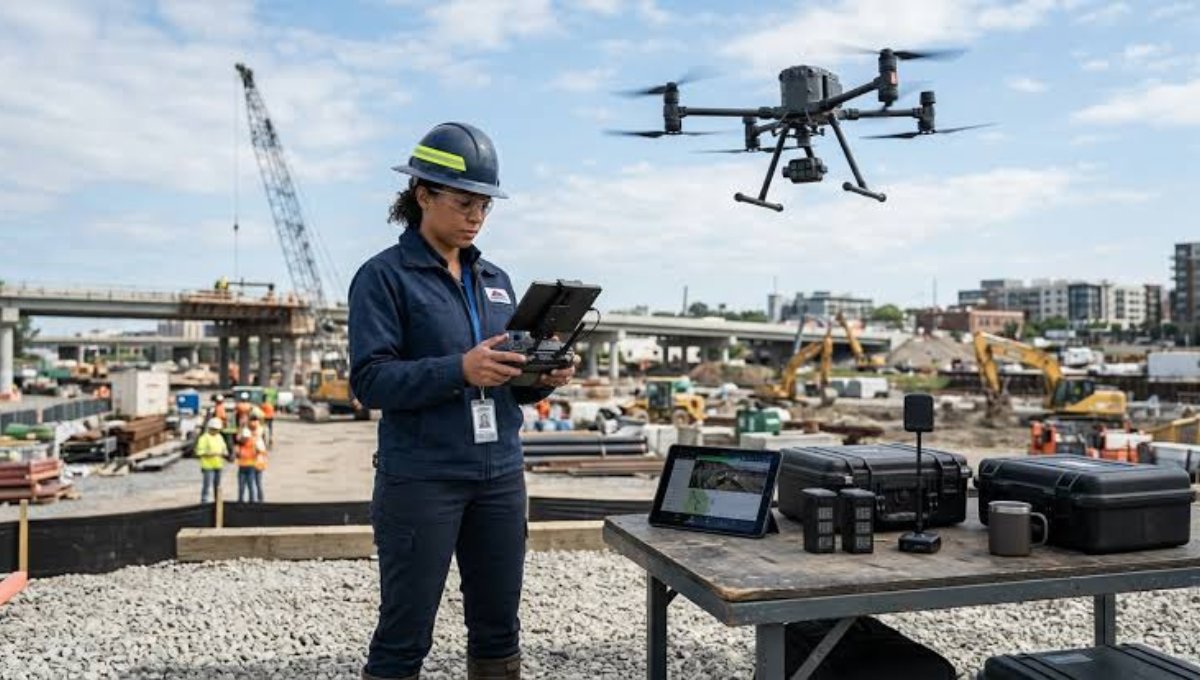
Professional drone pilots do much more than move a joystick. Before a mission, they may inspect the aircraft, batteries, propellers, GPS and other systems. During the flight, they monitor the aircraft and surrounding environment. After the mission, they may maintain flight records, transfer data, inspect equipment and prepare reports. Modern drone jobs can therefore combine aviation, technology, fieldwork and data.
The biggest reason behind the growth is simple: drones can often collect information faster, reach difficult locations and reduce the need to expose people to dangerous environments.
The government says drones are being used in India for land surveys, precision agriculture, infrastructure inspection, disaster management, railway and highway monitoring and other applications. Under the SVAMITVA scheme alone, drone surveys had been completed in around 3.28 lakh villages by December 2025, covering about 95% of the targeted villages at that stage.
Agriculture is another major area. Drone-based spraying, crop monitoring and field mapping are creating demand for pilots who understand both drone operations and agricultural workflows.
At the same time, construction companies, survey firms, inspection companies, media agencies and drone service providers are developing their own requirements for trained operators.
The opportunity is therefore becoming broader than the traditional image of a person flying a camera drone.
A drone pilot can choose from several career paths depending on their interests and additional skills. Some roles are heavily focused on flying, while others combine piloting with surveying, photography, agriculture, inspection or data analysis.
| Career Area | Typical Work | Useful Additional Skills |
|---|---|---|
| Agriculture | Spraying, crop monitoring, mapping | Agritech, mission planning |
| Surveying & Mapping | Land surveys, 3D mapping | GIS, photogrammetry |
| Construction | Site monitoring, progress mapping | Construction knowledge |
| Infrastructure Inspection | Roads, bridges, power lines, solar plants | Inspection procedures |
| Real Estate | Property photography and video | Photography, editing |
| Film & Media | Cinematic aerial footage | Cinematography |
| FPV | Racing, freestyle, cinematic flying | FPV systems, camera work |
| Disaster Management | Damage assessment, aerial observation | Emergency response |
| Railways | Track and infrastructure monitoring | Safety and inspection |
| Logistics | Delivery and UAV operations | Mission planning, aviation |
| Drone Training | Teaching new pilots | Communication, instructor skills |
| Drone Services | Providing drone solutions to clients | Business and sales |
Agriculture is one of the most promising areas for drone pilots in India. Agricultural drones can be used for spraying pesticides, fertilisers, and other agricultural inputs. They can also support crop monitoring, field mapping and data collection.
A professional agriculture drone pilot needs more than basic flying skills. The operator must understand spraying patterns, flight height, coverage, battery management, weather conditions and safe handling procedures.
Current job listings demonstrate that these roles are already appearing in the market. For example, a 2026 agriculture drone pilot listing in Maharashtra advertised a salary range of ₹18,000 to ₹30,000 per month for crop-spraying operations. Another 2026 listing for an agriculture drone pilot in Nagpur advertised ₹4.8 lakh to ₹7.8 lakh per year and required skills including DGCA RPC, mission planning and field safety.
However, salary varies significantly by location, employer, experience, project type and responsibilities.
Surveying and mapping is another strong career path for drone pilots. Drones equipped with high-resolution cameras and other sensors can collect aerial images that are processed into maps, orthomosaics, 3D models, terrain information and other outputs. A pilot working in this field may fly pre-planned missions over construction sites, agricultural land, mining areas, roads or large properties.
The exciting part is that the pilot who understands GIS and photogrammetry can become more valuable than someone who only knows how to operate the aircraft. If you are interested in geography, civil engineering, surveying or computers, this can be a particularly useful specialisation.
Large construction projects generate huge amounts of information. Project managers need to know whether construction is progressing according to plan, whether materials are being used correctly and whether different sections of a project are developing on schedule.
Drones can capture aerial images and videos at regular intervals, allowing teams to compare progress over time. A drone pilot may therefore work at highways, bridges, buildings, industrial projects, solar farms and other large sites.
The Government of India has also highlighted drone-based monitoring in highway development. NHAI mandates monthly drone-video recordings for highway projects, which are used for progress comparison and monitoring. This creates opportunities for pilots who can combine flying skills with construction-site awareness and data management.
Imagine inspecting a tall structure, power line or difficult-to-reach industrial location without sending a person directly into a potentially dangerous position. This is one of the areas where drones can provide significant value.
Drone pilots can support inspections of power infrastructure, pipelines, bridges, solar installations, towers and other assets. The job may involve flying close to structures while maintaining safe distances, capturing high-quality imagery and identifying potential issues for engineers or inspection teams.
Technical knowledge becomes extremely important here because the pilot needs to understand the mission objective, payload and operational limitations.
Indian Railways has also adopted drones for infrastructure monitoring and maintenance activities. According to the government, UAVs are being used for monitoring railway tracks, bridges and other infrastructure, while the Railway Protection Force has adopted drones for surveillance and crowd-management applications.
This area can offer opportunities for pilots interested in large-scale infrastructure and public-sector projects. The work may involve planned inspection missions, aerial photography, surveillance support and documentation.
This is probably the career path most people associate with drones. Drone cinematography can completely change the way a scene looks. Aerial shots can add scale and movement to films, advertisements, weddings, documentaries, sports events, travel videos and social-media content.
However, professional aerial cinematography requires more than knowing how to fly.
You also need to understand composition, camera movement, lighting, exposure, movement speed and storytelling. FPV pilots can go a step further by creating fast and immersive shots that are difficult to achieve with conventional camera drones. For creative people, this can be an exciting combination of technology and art.
FPV, or First-Person View, is a specialised area of drone flying in which the pilot experiences the flight through a live camera feed. FPV pilots work in racing, freestyle flying, cinematic production, advertising, events and social-media content. The learning curve can be steeper than conventional camera-drone flying because FPV aircraft can be highly responsive and require strong manual control.
A pilot who wants to pursue FPV professionally should spend considerable time on simulators and practical training before attempting demanding real-world flights.
It is also important to remember that an FPV skill course and DGCA-authorized remote pilot training are not automatically the same thing. The regulatory requirements applicable to a particular operation should always be checked.
Drones can become extremely useful when roads are blocked, terrain is dangerous or a large area needs to be assessed quickly. Government programmes are already using drone technology in disaster management. The PIB notes applications involving floods, landslides and other emergencies where aerial visuals can help teams understand affected areas and coordinate rescue activities. A drone pilot working in this environment needs excellent situational awareness and safety discipline because conditions may change rapidly.
Experienced pilots can eventually move into training. A drone instructor may teach students aircraft controls, safety procedures, flight planning, regulations, maintenance and practical flying.
India’s expanding training ecosystem is creating opportunities in this area. The Directorate General of Training has introduced Drone Technician and Drone Pilot (Junior) courses through NSTIs and ITIs, while NSTI Ramanthapur, Hyderabad has been authorised as an RPTO. For someone who enjoys teaching and already has strong practical knowledge, training can become a natural career progression.
You do not necessarily have to work as an employee forever. Experienced pilots can build drone-service businesses for agriculture, mapping, photography, inspections, construction monitoring and other applications.
The business model can be simple at the beginning. A pilot can specialise in one service, develop a portfolio, build relationships with local businesses and gradually add equipment and team members.
The most important thing is to sell a solution rather than simply selling drone flying. For example, instead of telling a construction company that you can fly a drone, you can offer regular aerial progress documentation and organised project imagery. Instead of simply offering agriculture drone services, you can provide planned spraying operations with proper records and field coordination. That difference can have a major impact on business value.
Requirements depend on the type of drone operation and the training route you choose. For professional operations requiring certification, candidates should carefully check the latest DGCA requirements and choose an appropriately authorised training organisation. The regulatory framework has evolved, so relying on an old blog post or outdated certificate advertisement can be risky.
DGCA’s training framework covers areas such as air law, airspace, principles of flight, meteorology, ATC procedures, maintenance, risk assessment, emergency procedures and payload utilisation.
For specialised careers, additional education can be extremely useful.
| Career Goal | Helpful Background |
|---|---|
| Agriculture | Agriculture/Agritech knowledge |
| Surveying | Civil engineering, surveying, GIS |
| Mapping | GIS, photogrammetry |
| Inspection | Engineering/technical knowledge |
| Filmmaking | Photography, cinematography |
| FPV | FPV flying and simulator practice |
| Technician | Electronics, mechanical skills |
| Data Specialist | GIS, image processing, software |
| Trainer | Strong practical experience and communication |
Flying ability is only the foundation. A successful drone professional should gradually develop technical, operational and communication skills.
Mission planning is particularly important because professional flights need preparation. Weather awareness, battery management, equipment inspection, emergency procedures and accurate documentation can make a major difference.
Depending on your specialisation, you may also need skills in GIS, photogrammetry, image editing, agriculture, inspection procedures or video production.
Some of the most valuable skills include:
There is no single fixed salary for drone pilots in India. Earnings depend heavily on specialization, experience, location, employer and whether the pilot works on a salary, contract or project basis.
Current 2026 job listings show this variation clearly. One agriculture drone pilot role listed ₹15,000 to ₹20,000 per month, while another agriculture-focused listing showed ₹4.8 lakh to ₹7.8 lakh annually.
Specialized pilots with surveying, inspection, data-processing or cinematic skills may command higher compensation than entry-level operators.
| Experience Level | Indicative Career Position |
|---|---|
| Beginner | Trainee / Junior Drone Pilot |
| 1–3 Years | Field Drone Pilot / Specialist |
| 3–5 Years | Senior Pilot / Mission Specialist |
| 5+ Years | Lead Pilot / Trainer / Project Specialist |
| Experienced Entrepreneur | Drone Service Business |
These are career stages rather than guaranteed salary bands. Actual earnings can vary considerably.
The future looks promising, but it is important to approach the industry realistically. India already has tens of thousands of certified remote pilots, which means simply obtaining a certificate may not be enough to stand out. The strongest candidates are likely to be those who combine piloting with another valuable skill.
A survey pilot who understands GIS can offer more than a basic operator. An agriculture pilot who understands spraying operations can become more useful to agribusinesses. A filmmaker who can confidently fly FPV can create specialised content. A technician who understands electronics and flight systems can work beyond the pilot seat. In other words, specialisation is becoming increasingly important.
If you are starting from zero, do not feel overwhelmed by the technology. You do not need to master everything on day one. Start by understanding drone fundamentals and basic flight controls. Then learn about applicable regulations and safety. If your intended professional operation requires certification, complete training through an appropriately authorised organisation. Once your basic flying is comfortable, choose one specialization such as agriculture, surveying, inspection, filmmaking or FPV.
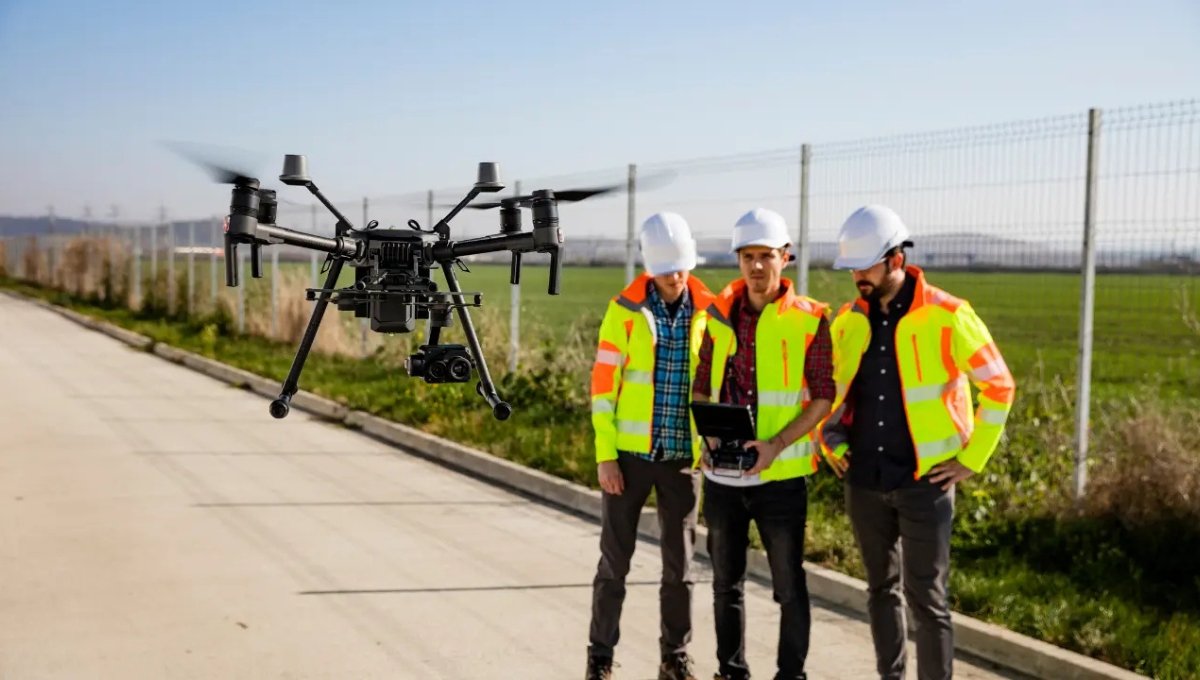
After that, build practical experience. Create a portfolio of legitimate projects, maintain proper flight records and learn the software used in your chosen field. Your goal should be to move from “I can fly a drone” to “I can use a drone to deliver a professional result.”
Disclaimer: This article is intended for general educational and informational purposes only. Drone regulations, certification requirements, operational permissions, job openings, salaries and industry practices can change over time. Candidates should verify the latest requirements directly with DGCA and the relevant employer or training organisation before enrolling in a course, applying for a job or conducting professional drone operations. Salary figures mentioned in the article are examples based on available 2026 job listings and should not be treated as guaranteed income.