By Viraj • September 11, 2026
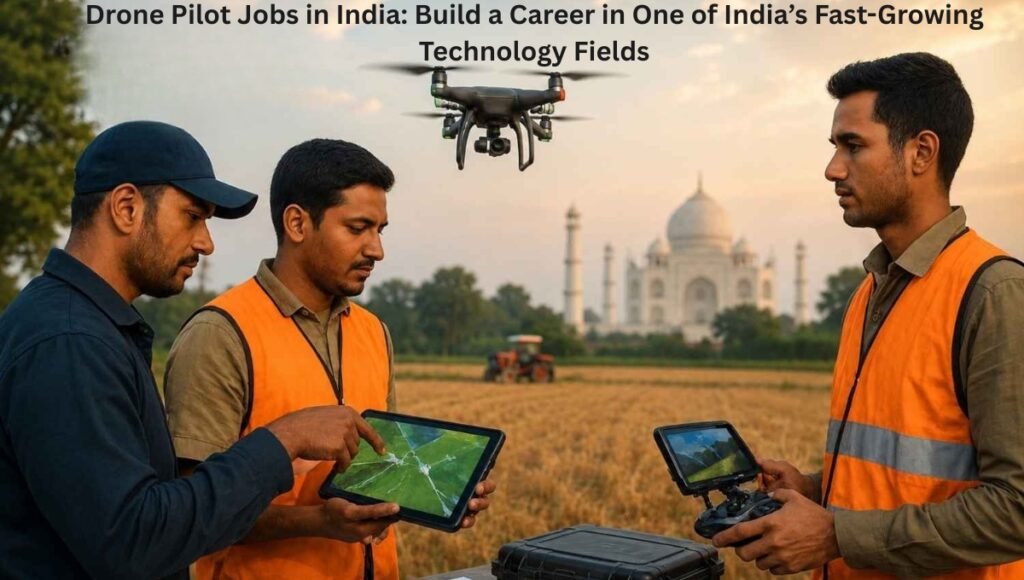
Drone Pilot Jobs in India: There was a time when flying a drone simply meant capturing beautiful aerial photographs or making interesting videos. Today, things have changed dramatically. Drones are being used to spray agricultural fields, survey land, inspect roads and bridges, create maps, monitor construction projects, collect aerial data, and support many government and private-sector operations.
This change is creating a new type of professional: the drone pilot.
A drone pilot is no longer simply someone who knows how to control a flying machine. In professional jobs, employers often expect pilots to understand flight safety, mission planning, equipment checks, data collection, troubleshooting, documentation, and the specific purpose behind each flight.
For students, graduates, technical professionals, agriculture workers, photographers, survey professionals, and even people looking for a new career direction, drone pilot jobs can offer an interesting path into the growing UAV industry.
A professional drone pilot operates an unmanned aircraft to complete a specific task. The exact work depends heavily on the industry. For example, an agriculture drone pilot may operate spraying drones over farms, while a survey drone pilot may capture high-resolution aerial images for mapping. An inspection pilot may fly around bridges, towers, solar plants, railway infrastructure, or construction sites to collect visual information.
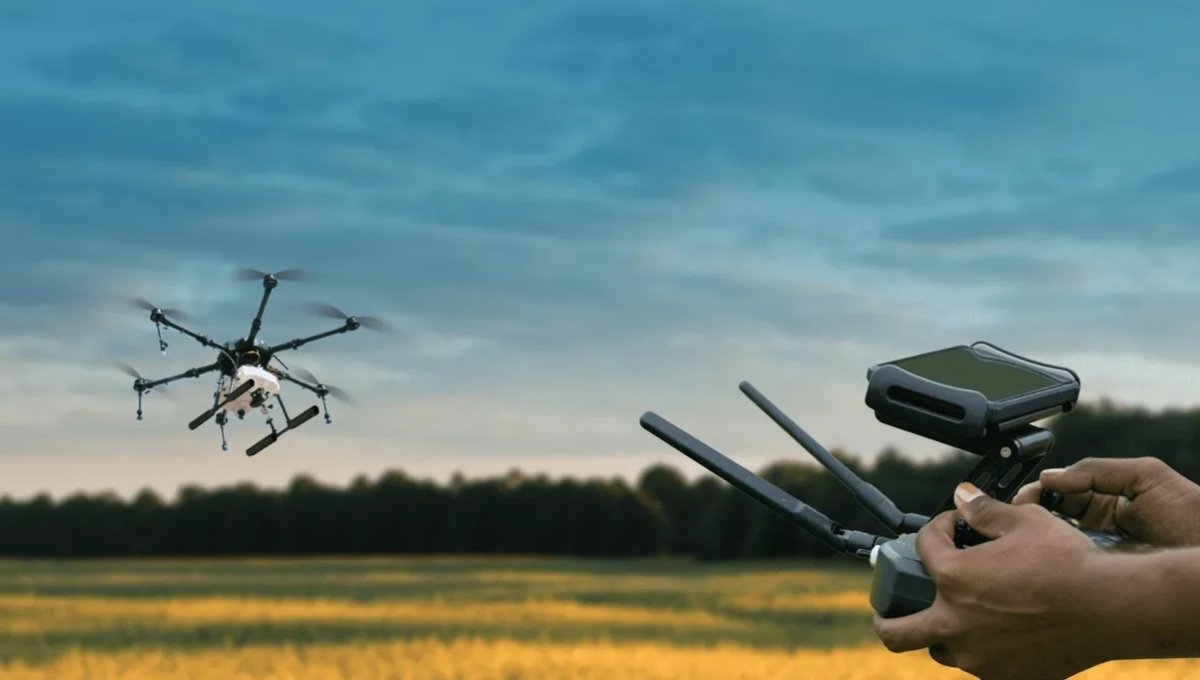
The job also involves much more than simply taking off and landing. Professional pilots usually have to inspect the drone before flight, check batteries and equipment, plan the mission, assess the operating environment, follow applicable airspace and safety requirements, maintain flight records, and inspect the equipment after the operation.
Recent Indian job listings show employers looking for pilots who can handle pre-flight and post-flight checks, mission planning, troubleshooting, field coordination, flight records, and specialised drone equipment. This is why a good drone pilot needs both flying ability and technical discipline.
The demand for drone professionals is connected to the wider expansion of drone applications across India. Government programmes and private businesses are increasingly using drones where traditional methods can be slower, more expensive, or difficult to execute.
One strong example is land surveying. Under the SVAMITVA programme, drones have been used extensively for village mapping and property-related surveys. The Government of India reported that 3.28 lakh villages had been surveyed using drones by February 2026.
Agriculture is another major area. Drones are being used for precision spraying, crop monitoring, farm surveys, and other technology-driven agricultural activities. The Namo Drone Didi initiative has also supported the use of agricultural drones through women’s self-help groups, with beneficiaries receiving drone-pilot training through DGCA-authorised Remote Pilot Training Organisations. As these applications expand, the requirement is not only for drones but also for trained people who can operate them safely and efficiently.
The drone industry is much broader than one job title. Your opportunities can change depending on the skills you develop and the industry you choose.
| Drone Pilot Career | Main Work | Useful Additional Skills |
|---|---|---|
| Agriculture Drone Pilot | Crop spraying and farm operations | Agriculture, spray systems, field safety |
| Survey Drone Pilot | Land surveys and aerial mapping | GIS, photogrammetry, surveying |
| Mapping Drone Pilot | Aerial imagery and 3D mapping | GIS, mapping software, RTK/PPK |
| Infrastructure Inspection Pilot | Inspection of roads, bridges, towers and structures | Inspection procedures, reporting |
| Construction Drone Pilot | Site monitoring and progress documentation | Construction knowledge, mapping |
| Cinematography Drone Pilot | Aerial photography and video | Camera operation, filmmaking |
| Industrial Drone Pilot | Industrial inspection and data collection | Technical troubleshooting |
| Drone Operations Executive | Planning and managing drone missions | Team management, documentation |
| Drone Survey Technician | Data capture and field support | GIS and survey technology |
| UAV Maintenance Technician | Drone servicing and troubleshooting | Electronics, mechanics, UAV systems |
This variety is one of the biggest advantages of entering the drone sector. You do not necessarily have to remain a general-purpose pilot throughout your career.
Agriculture is currently one of the most visible employment areas for drone pilots in India. Agricultural drones can be used for precision spraying and other farm operations. A trained agriculture drone pilot may be responsible for preparing the drone, checking batteries and GPS, configuring the spraying system, planning flight paths, operating the aircraft, monitoring the spraying process, and maintaining operational records.
Recent job listings in India have advertised agricultural drone pilot positions with salaries around ₹15,000 to ₹30,000 per month, depending on the employer, experience, and location. Other current listings show similar ranges of around ₹18,000 to ₹30,000 per month for agricultural drone operations. Agricultural drone work can be particularly attractive for people who are comfortable with field-based jobs and travelling between farming locations.
Surveying and mapping are among the most technically interesting areas of drone operations. A survey drone can collect aerial imagery that is later processed into maps, orthomosaics, 3D models, point clouds, or other datasets. Drone pilots working in this field may work alongside surveyors, GIS professionals, civil engineers, or data analysts.
Modern employers may look for knowledge of mission-planning applications, GIS software, photogrammetry, and RTK or PPK workflows in addition to basic flying skills. A current drone pilot listing in Gurugram, for example, mentions aerial surveys, inspections, GIS coordination, orthomosaics, LiDAR/photogrammetry data, and tools such as QGIS, ArcGIS, DroneDeploy and QGroundControl. This means learning mapping technology can significantly strengthen a pilot’s career prospects.
Drone inspection is another growing professional application. Instead of sending workers into difficult or potentially dangerous locations, organisations can use drones to capture images and videos of structures and equipment. Applications can include infrastructure, construction sites, solar installations, industrial facilities, roads, railway assets, and other structures.
The pilot’s responsibility may involve planning the inspection route, maintaining a safe distance from structures, capturing clear imagery, monitoring the aircraft, and organising the collected information for the inspection team.
This type of career can become particularly valuable when combined with knowledge of engineering, construction, electrical systems, or industrial safety.
The creative side of the drone industry continues to exist as well. Drone pilots can work with production houses, advertising agencies, wedding photographers, tourism companies, real-estate businesses, filmmakers, and content creators.
However, professional aerial cinematography requires more than knowing how to move a drone. Camera composition, exposure, smooth movements, lighting, storytelling, editing, and understanding the client’s creative requirements can make a major difference. For someone who already has photography or video-production skills, professional drone flying can become a powerful additional skill.
The exact eligibility and certification requirements depend on the category of drone operation and the applicable DGCA rules. For professional work, candidates should carefully verify the current requirements and choose an appropriate DGCA-authorised Remote Pilot Training Organisation (RPTO) when certification is required.
Training generally covers areas such as drone systems, flight principles, safety, airspace awareness, operational procedures, practical flying, emergency procedures, and equipment handling. DGCA’s training framework defines the role of authorised RPTOs in providing remote pilot training for individuals seeking the relevant Remote Pilot Certificate.
Many training providers currently list Class 10 as a basic academic requirement and 18 years as a minimum age for their small-category programmes, but candidates should always confirm the latest eligibility requirements before enrolling.
A certificate can help you enter the industry, but employers usually want practical ability. A strong pilot should be comfortable with manual and automated flights, pre-flight inspection, battery management, basic maintenance, mission planning, emergency handling, and accurate documentation.
Technical skills can make an even bigger difference. Knowledge of GIS, photogrammetry, mapping applications, RTK/PPK technology, aerial photography, agricultural spraying systems, or inspection workflows can help a candidate move beyond basic pilot roles.
Communication and field discipline also matter. Drone pilots often work with farmers, surveyors, engineers, clients, project managers, and ground teams. Being able to understand instructions and communicate problems clearly is an important professional advantage.
Drone pilot salaries vary significantly depending on experience, location, industry, certification, technical skills, travel requirements, and the complexity of the work.
Current job listings provide a useful indication of the market. Some agriculture drone pilot positions are advertising around ₹15,000 to ₹30,000 per month, while other current listings show ₹25,000 to ₹30,000 for experienced agricultural drone operations.
A current Gurugram-based listing for a DGCA-certified drone pilot involved in aerial surveys and inspections lists compensation of approximately ₹20,000 to ₹40,000 per month, with field allowances and travel, food and accommodation coverage during deployments.
These figures should be treated as examples rather than guaranteed salary levels.
| Experience Level | Possible Monthly Range | Typical Situation |
|---|---|---|
| Beginner | ₹15,000–₹25,000 | Entry-level field operations |
| Early Career | ₹20,000–₹35,000 | Regular commercial projects |
| Skilled Pilot | ₹30,000–₹50,000+ | Specialised operations and technical skills |
| Senior Specialist | Varies widely | Team leadership, advanced surveys or specialised industries |
Experienced professionals with additional expertise in GIS, surveying, inspection, agriculture, data processing, or drone operations management may have better earning potential than someone offering only basic flying skills.
Drone pilots can find opportunities across agriculture companies, surveying firms, infrastructure companies, construction organisations, drone manufacturers, inspection businesses, media companies, mapping companies, government projects, research organisations, and specialist UAV service providers.
Job portals can also provide a useful picture of the market. Current listings in India include opportunities for agriculture pilots, inspection pilots, general drone pilots, and DGCA-certified professionals in locations such as Gurugram, Bengaluru, Maharashtra, Uttar Pradesh, Andhra Pradesh, and other regions.
Candidates should search using multiple job titles because companies may advertise similar roles under names such as Drone Pilot, UAV Pilot, Remote Pilot, Drone Operator, UAV Operator, Agriculture Drone Pilot, Drone Survey Pilot, or Drone Operations Executive.
The drone sector is also receiving attention through government skill-development initiatives. In March 2026, the Directorate General of Training under the Ministry of Skill Development and Entrepreneurship announced drone-related training initiatives, including Drone Technician and Drone Pilot (Junior) courses through selected National Skill Training Institutes and Industrial Training Institutes. NSTI Ramanthapur in Hyderabad was also authorised as an RPTO by DGCA.
This is important because the drone industry needs more than pilots. It also needs technicians, maintenance professionals, data specialists, survey experts, trainers, software professionals, and operations managers.
The smartest approach is not to stop learning after getting a pilot certificate. Build a small professional portfolio showing the kind of work you can actually perform. If you are interested in surveying, learn mapping and GIS. If agriculture attracts you, understand spraying operations and field safety. If filmmaking is your goal, develop a strong aerial-video portfolio. If infrastructure interests you, learn inspection workflows and reporting.
Practical experience can be especially valuable for freshers. Even small projects can help you demonstrate that you understand real-world operations rather than only classroom theory.
It is also important to keep your documentation, flight records, certificates, and technical knowledge organised. Employers are more likely to trust a pilot who demonstrates professionalism and understands the responsibility that comes with operating an aircraft.
The future looks promising, but it will also become more competitive. As drones become more autonomous, the role of the human pilot is likely to evolve. Pilots may increasingly become drone operators, mission specialists, field technicians, data-collection professionals, and operations managers rather than simply people who manually control aircraft. The Indian government has already highlighted applications of drones in agriculture, infrastructure inspection, disaster management, land surveying, highways, railways, and other sectors.
That means the strongest future candidates may be those who combine flying skills with another professional domain. Someone who only knows how to fly may find limited opportunities. A person who can fly, plan missions, troubleshoot equipment, collect accurate data, understand GIS, communicate with clients, and work safely can become much more valuable.
Disclaimer: Drone regulations, certification requirements, job availability, salaries, and training fees can change over time. The salary figures mentioned in this article are based on current job listings and should not be considered guaranteed income. Candidates should verify the latest requirements, authorised training organisations, operational rules, and certification procedures through official DGCA sources before enrolling in a course or accepting a drone-related job. Employment also depends on skills, experience, location, employer requirements, and industry demand.