By Viraj • September 17, 2026
Online MBA Admission: Choosing the right MBA programme can feel like a life-changing decision. For many students, an MBA represents more than another degree. It can be a chance to develop business knowledge, improve professional skills, move into management, change career direction, or finally turn a business idea into reality. But not everyone can leave their job or relocate to another city for a traditional classroom-based MBA.
This is where an Online MBA has become an attractive option.
In 2026, students and working professionals can find online management programmes offered by universities across India. Classes, study materials, assignments, academic support and several other activities can be accessed digitally, giving learners more flexibility than a conventional full-time programme.
However, flexibility should not mean choosing a programme without proper research. Before applying for Online MBA Admission 2026, students should carefully check the university, the specific programme, eligibility requirements, total fees, curriculum, examination system and current recognition or entitlement status.
The UGC’s Distance Education Bureau maintains information about Higher Educational Institutions and programmes recognised or entitled for Online and Open and Distance Learning modes. Students should use the official UGC-DEB information to verify their chosen programme before taking admission.
An Online MBA is a postgraduate management programme delivered primarily through online learning. Instead of attending a physical classroom every day, students generally study through a university’s online learning platform. Depending on the university, students may receive recorded lectures, live classes, digital study material, assignments, discussion sessions, online examinations and academic support.

The curriculum generally covers subjects related to business and management. Students may study areas such as marketing, finance, human resources, operations, organisational behaviour, business strategy and entrepreneurship. Many universities also provide specialised MBA programmes focusing on areas such as business analytics, digital marketing, international business and supply chain management. The biggest attraction is flexibility. A working professional can continue working while studying, while a graduate can pursue higher education without necessarily relocating to a different city.
The workplace has changed significantly. Companies increasingly need professionals who understand not only their own job responsibilities but also business strategy, technology, communication, data and leadership.
An Online MBA can help learners develop a broader understanding of how organisations operate.
For a working professional, it can provide an opportunity to upgrade qualifications without taking a career break. For a fresh graduate, it can introduce important management concepts and help build a foundation for a business career. For an entrepreneur, the programme can provide structured knowledge about finance, marketing, operations and strategic planning.
Another major advantage is convenience. Students can often access learning material from home, which can reduce travel and relocation requirements.
However, online education requires self-discipline. Students still need to attend academic sessions where required, complete assignments, prepare for examinations and meet university deadlines.
| Admission Factor | General Details |
|---|---|
| Programme | Master of Business Administration |
| Mode | Online |
| Duration | Commonly around 2 years |
| Eligibility | Bachelor’s degree from a recognised institution |
| Specialisations | Marketing, Finance, HR, Analytics, Operations and others |
| Entrance Requirement | Depends on the university |
| DEB ID | Required for Online/ODL admission under the UGC-DEB framework |
| Admission Mode | Mostly online application |
| Suitable For | Graduates, professionals and eligible learners |
| Recognition | Verify current UGC-DEB status for the specific programme |
The exact conditions can differ between universities, so students should not assume that every Online MBA follows identical rules.
Eligibility is one of the first things students should check before submitting an application.
Most Online MBA programmes require applicants to hold a bachelor’s degree from a recognised university or institution. Some universities may specify a minimum percentage, while others may have additional requirements.
Work experience is not necessarily compulsory for every Online MBA. Some programmes are designed for fresh graduates, while others may be particularly suitable for working professionals.
Certain universities may also have entrance requirements or their own admission screening process.
| Eligibility Requirement | General Information |
|---|---|
| Educational Qualification | Bachelor’s degree |
| Academic Institution | Recognised university/institution |
| Minimum Marks | Varies by university |
| Work Experience | Depends on programme |
| Entrance Test | May or may not be required |
| Age Requirement | Depends on university rules |
Applicants should always read the official admission notification before applying because eligibility criteria can change.
Students planning Online MBA Admission 2026 should understand the role of the DEB ID.
The UGC-DEB states that learners seeking admission to recognised or entitled Online and Open and Distance Learning programmes need to create a DEB ID. The system is intended to help learners ensure that they are enrolling in recognised or entitled institutions and programmes.
The DEB ID is created using an Academic Bank of Credits, or ABC ID. UGC-DEB provides information and instructions for creating the required IDs through its official portal.
This is an important step because students should not simply trust advertisements claiming that a particular online MBA is recognised. The status of the institution and programme should be checked through the official UGC-DEB system.
The admission process is generally convenient because much of it can be completed online.
Students should begin by deciding what they want from an MBA. Someone interested in finance may have different priorities from someone interested in marketing or business analytics.
After identifying their career objective, students can shortlist universities offering suitable programmes. They should then verify the university and specific MBA programme through the UGC-DEB portal for the relevant academic session.
Once the programme is verified, students can visit the university’s official admission website and read the eligibility criteria, fee structure, curriculum and admission schedule.
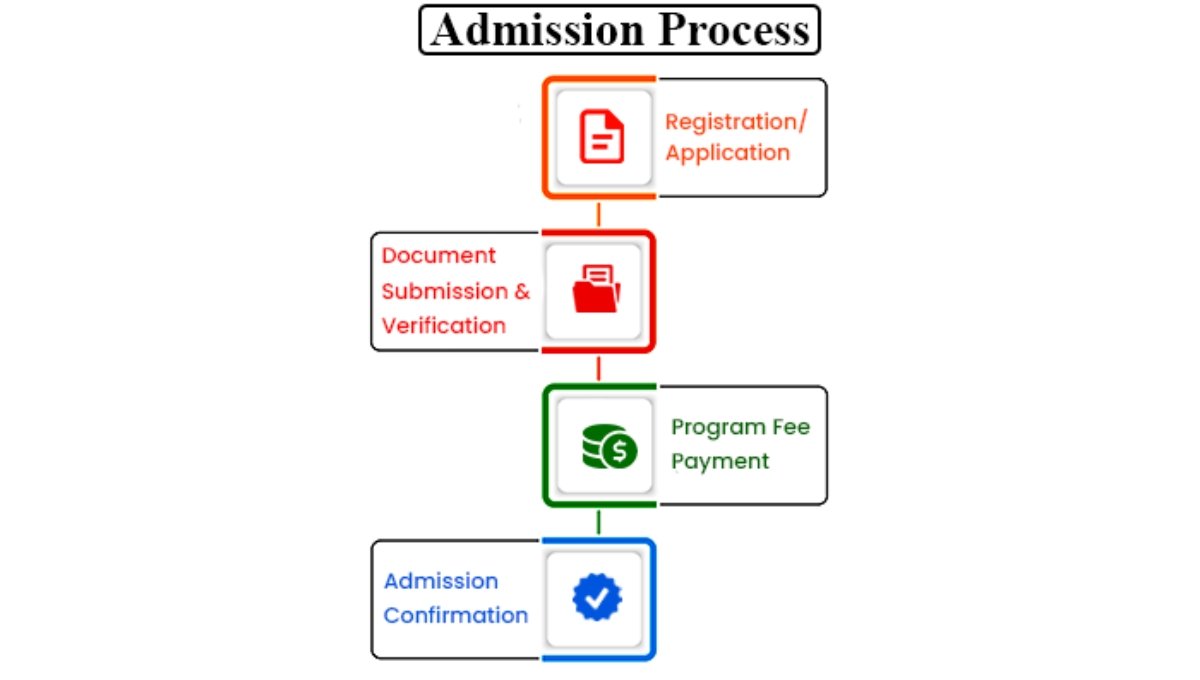
The application form can then be completed with personal and academic information. Required documents are uploaded, and the applicable fee is paid through the official admission portal.
After verification, the university provides admission confirmation and information about classes, study material and examinations.
| Admission Stage | Details |
|---|---|
| Research | Find suitable Online MBA programmes |
| Shortlisting | Compare universities and specialisations |
| Recognition Check | Verify UGC-DEB status |
| DEB ID | Create the required learner ID |
| Application | Fill in the university application |
| Documents | Upload required certificates |
| Fee Payment | Pay through the official portal |
| Verification | University checks the application |
| Confirmation | Admission is confirmed |
| Learning | Begin classes and academic activities |
The exact requirements depend on the university, but students commonly need academic and identity documents.
A graduation marksheet, degree certificate or provisional certificate may be required along with government-issued identity proof, photographs and personal information.
Some universities can request additional documents depending on the applicant’s category or programme. Working professionals may also need to provide employment or experience documents if the programme requires them.
Students should make sure that important personal information is consistent across documents to reduce the possibility of verification problems.
Selecting the right specialisation can shape the direction of your MBA journey.
Marketing is a popular choice for students interested in advertising, branding, sales, customer behaviour and digital marketing. Finance is suitable for learners interested in banking, financial management, corporate finance and investment-related areas.
Human Resource Management focuses on people and organisations, including recruitment, employee development, performance management and workplace behaviour.
Business Analytics is increasingly relevant in organisations where data is used for business decisions. Operations Management focuses on processes, supply chains, logistics and operational efficiency.
Entrepreneurship is another interesting option for students who want to build businesses or work in startup environments.
| Specialisation | Major Areas |
|---|---|
| Marketing | Branding, Sales, Advertising, Digital Marketing |
| Finance | Banking, Corporate Finance, Financial Management |
| Human Resources | Recruitment, Talent Management, HR Operations |
| Business Analytics | Data Analysis, Business Intelligence, Decision Making |
| Operations | Supply Chain, Logistics, Process Management |
| International Business | Global Markets and International Trade |
| Entrepreneurship | Startups, Innovation, Business Development |
| IT Management | Technology, Product and Digital Management |
Students should select a specialisation based on their interests and career plans rather than simply following trends.
Fees vary considerably from one university to another. The total cost can depend on the institution, specialisation, learning resources, academic services and payment structure.
Some online universities offer relatively affordable MBA programmes, while premium institutions may charge significantly higher fees.
Students should not compare universities only on tuition fees. They should also check whether registration, examination, project, certification or other charges are included.
| Online MBA Category | General Investment |
|---|---|
| Affordable Programmes | Lower fee range |
| Mid-range Programmes | Moderate investment |
| Premium Programmes | Higher investment |
| Specialised Programmes | Depends on institution |
Before making a payment, students should obtain the latest fee structure directly from the university.
A typical Online MBA programme is structured over approximately two years, although the exact duration and maximum completion period depend on the university and applicable regulations.
The programme may be divided into several semesters. Students normally study foundational management subjects in the earlier stages and move towards specialised subjects and projects later.
One common misconception is that an online MBA is easy simply because classes are conducted online. In reality, students still need to manage assignments, examinations, projects and academic deadlines.
India has several universities offering online management programmes. Students may come across institutions such as Amity University Online, NMIMS, Manipal University Jaipur, Jain University, Chandigarh University and other institutions appearing in the UGC-DEB database.
However, there is no single university that is automatically the right choice for every student.
Instead of relying on a generic “best university” list, students should verify the current status of the specific MBA programme for their admission session.
| University/Institution | What Students Should Compare |
|---|---|
| Amity University Online | Curriculum, specialisations, fees and support |
| NMIMS | Programme structure, fees and eligibility |
| Manipal University Jaipur | Specialisations, curriculum and learning platform |
| Jain University | Programme options and academic structure |
| Chandigarh University | Programme status, fees and specialisations |
| Other UGC-DEB Listed Institutions | Current entitlement and programme details |
The UGC-DEB portal should remain the primary reference for checking recognition or entitlement information.
Students often wonder whether they should choose an Online MBA or a traditional classroom MBA.
A regular MBA generally provides a campus environment, face-to-face interaction and immersive networking. An online programme offers greater flexibility and can be more convenient for people who are already working.
| Factor | Online MBA | Regular MBA |
|---|---|---|
| Learning Mode | Primarily online | Classroom-based |
| Flexibility | High | Comparatively lower |
| Working Alongside Study | Easier | More difficult in full-time programmes |
| Campus Experience | Limited | Strong |
| Relocation | Usually not required | May be required |
| Learning Schedule | More flexible | More structured |
| Networking | Online and professional | Campus and professional |
The right option depends on your circumstances, learning style, budget and career goals.
An Online MBA can prepare students for different business and management roles.
Marketing graduates may explore digital marketing, sales, brand management and business development. Finance graduates can pursue areas such as financial analysis, banking and corporate finance.
HR graduates may work in recruitment, talent acquisition, HR operations and employee management. Business analytics graduates can explore business analyst and data-driven management roles.
Operations graduates can look at supply chain, logistics and operations positions, while entrepreneurship students may choose to develop their own businesses.
The degree itself does not guarantee a specific job. Employers also consider practical knowledge, communication skills, work experience, technical abilities and interview performance.
There is no fixed salary for Online MBA graduates.
A fresher completing an MBA may have a different starting salary from a professional who already has several years of experience. Industry, location, job role, specialisation and skills can all influence compensation.
Students should therefore be careful with advertisements promising guaranteed salaries after completing an online MBA.
Building practical skills alongside the degree can be valuable. Depending on your career direction, skills in Excel, Power BI, financial modelling, digital marketing, data analysis, communication or project management can strengthen your professional profile.
Choosing a university should be a thoughtful decision rather than a rushed purchase.
The first thing to verify is the current UGC-DEB recognition or entitlement status of the specific university and programme. The UGC-DEB portal provides official information for this purpose.
After that, compare the curriculum and specialisations. Look at whether the subjects match your career objectives and whether the programme provides practical learning opportunities.
You should also examine the faculty, learning platform, student support, examination process, total fees, academic schedule and career services.
Placement claims deserve special attention. If a university advertises impressive salary figures, look for transparent information about the number of students placed, companies involved, job roles and salary distribution rather than relying on a single headline figure.
The cost of an MBA can feel significant, especially for students who are paying for their education themselves. Depending on the university and eligibility, students may find merit-based scholarships, category-based support, need-based assistance or other financial schemes.
Education loans can also be considered where appropriate.
The availability and conditions of scholarships vary between institutions, so students should check the official financial-aid information of their chosen university.
For the right learner, an Online MBA can be a practical and flexible higher-education option. It can be particularly useful for professionals who want to continue working while developing management knowledge. It can also help graduates gain a structured understanding of business and prepare for roles involving marketing, finance, HR, operations, analytics and leadership. But an MBA should not be viewed as a shortcut to instant success. The real value comes from combining the degree with practical experience, professional networking, communication skills and continuous learning.
Online MBA Admission 2026 can be an exciting opportunity for students and working professionals who want to move forward without putting their existing lives completely on hold.
The flexibility of online education can make management studies more accessible, but choosing the right programme requires careful research. Check the university, verify the specific programme through UGC-DEB, understand the complete fee structure, compare specialisations and examine the academic and career support available.
Most importantly, think about what you want your MBA to help you achieve.
A management degree can provide knowledge and open opportunities, but your skills, experience, consistency and willingness to keep learning will ultimately shape your professional journey. Choose your programme carefully, study with purpose and use your MBA as a foundation for the career you want to build.
Disclaimer: This article is intended for general educational and informational purposes only. Eligibility criteria, fees, admission dates, programme structures, examination rules, university policies and UGC-DEB recognition or entitlement may change. Students should verify the latest information directly through the official UGC-DEB portal and the official website of the university before applying or making any payment. An Online MBA does not guarantee a particular job, salary, promotion or career outcome.