By Viraj • September 4, 2026
DGCA Drone Training in India 2026: Have you ever watched a drone flying over a farm, construction site or wedding and wondered whether you could turn that technology into a career? You are not alone. Drones have moved far beyond being exciting gadgets for hobbyists. Today, they are becoming useful professional tools across agriculture, surveying, mapping, filmmaking, infrastructure inspection, disaster management and several other industries.
As the use of drones continues to expand in India, the need for people who know how to operate them safely and professionally is also growing. But becoming a professional drone pilot is not simply about buying a drone and learning to control it. You need proper training, an understanding of aviation and drone regulations, practical flying experience and knowledge of safety procedures.
This is where DGCA drone training becomes important.
The Directorate General of Civil Aviation, or DGCA, is India’s civil aviation regulator. Under India’s drone regulatory framework, Remote Pilot Training Organisations, commonly known as RPTOs, are authorised to provide prescribed remote-pilot training. DGCA also maintains an official system through which candidates can check approved RPTOs and their scope of authorisation.
The drone-training ecosystem has also grown considerably. The latest DGCA dashboard available in September 2026 records 284 RPTO approvals to date, including 51 approvals recorded in 2026.
For students and working professionals, this creates an exciting opportunity. But with more training providers entering the market, it has become equally important to understand what DGCA drone training actually means, who should take it, what you learn, how certification works, how much it can cost and what kind of career opportunities may follow.
Let’s understand the complete picture.
DGCA drone training refers to structured remote-pilot training delivered through an organization authorized by DGCA for the relevant training scope. The objective is not merely to teach someone how to operate a drone controller. Professional training is designed to develop knowledge of aviation regulations, drone operations, safety, airspace, weather, aircraft systems, emergency procedures and practical flying.
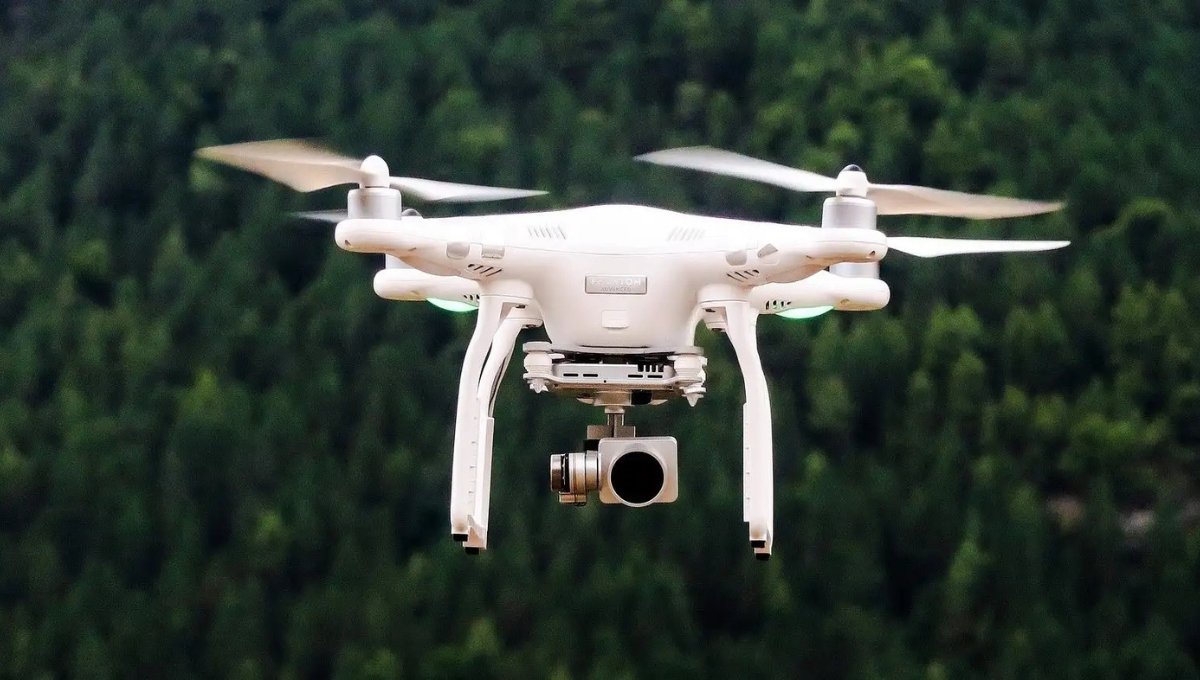
DGCA’s Drone Training Circular 02 of 2022 lays out a minimum training syllabus for remote pilots. The syllabus includes subjects such as air law, the Drone Rules, airspace, principles of flight, ATC procedures, fixed-wing operations, rotorcraft operations, hybrid operations, meteorology, crew resource management, instrument flying, weight and balance, performance, equipment maintenance, risk assessment, emergency procedures, payload operations and drone data analysis. That is why proper training can be very different from an informal drone-flying workshop.
RPTO stands for Remote Pilot Training Organisation.
An RPTO is an organisation authorised by DGCA to conduct prescribed remote-pilot training. DGCA’s training framework states that an RPTO provides training to individuals seeking a Remote Pilot Certificate under the applicable framework. This distinction is extremely important for anyone planning to enrol in a course.
Many private organisations may offer programs called drone courses, UAV courses, drone pilot courses or drone certification programs. Such a course may teach useful skills, but you should not automatically assume that every certificate issued by a private organisation has the same regulatory status as a Remote Pilot Certificate obtained through the applicable DGCA-authorized process.
Before paying your course fee, find out exactly who is conducting the training and what credential you will receive.
| Particular | Details |
|---|---|
| Regulatory Authority | Directorate General of Civil Aviation |
| Training Organization | DGCA-authorized RPTO, where applicable |
| Main Credential | Remote Pilot Certificate under the applicable framework |
| Training | Theory + practical flying |
| Important Subjects | Air law, airspace, weather, flight, safety, maintenance |
| Practical Training | Supervised drone operations |
| Digital Platform | Digital Sky/eGCA ecosystem as applicable |
| Career Areas | Surveying, mapping, agriculture, photography, inspection and more |
| Current RPTO Ecosystem | 284 approvals recorded on DGCA dashboard as of September 2026 |
The exact eligibility, training and certification requirements should always be confirmed against the latest DGCA rules and the current scope of the organisation you choose.
Eligibility depends on the specific regulatory pathway and training category applicable to the applicant. The Drone Rules framework established eligibility requirements for remote pilots, including age and educational requirements, while prescribed training is conducted through authorised organisations. Because regulatory requirements can be amended, applicants should verify the latest requirements before enrollment rather than relying on an old blog post or advertisement.
For someone considering drone training as a career, having basic education is only the starting point. What really matters after that is your ability to understand safety procedures, learn the technical aspects of the aircraft and develop strong practical flying skills.
| Eligibility Area | What to Consider |
|---|---|
| Age | Verify the current DGCA requirement |
| Education | Verify the current minimum educational requirement |
| Training | Complete prescribed training where applicable |
| Practical Ability | Develop safe and controlled flight skills |
| Regulatory Knowledge | Understand applicable drone rules |
| Documentation | Follow the current registration/certification process |
Do not assume that meeting the basic eligibility criteria automatically makes someone a professional pilot. Training quality and practical competence remain extremely important.
A good training program takes you from the basics of drone operation to more professional concepts. You begin by understanding the aircraft itself. This can include the different components, controls, propulsion systems, batteries and other equipment.
Then comes aviation knowledge. Students need to understand airspace, applicable rules and the responsibilities associated with operating an unmanned aircraft. Weather is another important subject. Wind, visibility and other conditions can influence a drone’s stability, battery performance and overall safety.
The course also introduces students to emergencies. A professional pilot should know how to react when the aircraft encounters a technical issue, communication problem, unexpected obstacle or other abnormal situation. According to DGCA’s published training syllabus, the academic component includes a wide range of operational and safety subjects rather than only basic flight control.
| Subject | Why It Matters |
|---|---|
| Air Law | Helps understand aviation and drone regulations |
| Drone Rules | Builds regulatory awareness |
| Airspace | Helps determine where operations can take place |
| Principles of Flight | Explains how the aircraft behaves |
| Aerodynamics | Important for understanding aircraft performance |
| Meteorology | Helps with weather-related decisions |
| ATC Procedures | Introduces aviation communication and procedures |
| Flight Operations | Develops operational knowledge |
| Maintenance | Helps identify equipment issues |
| Risk Assessment | Supports safer flight planning |
| Emergency Procedures | Prepares pilots for abnormal situations |
| Payload Operations | Useful for cameras and specialized equipment |
| Data & Analysis | Introduces the information collected by drones |
One of the biggest advantages of professional drone training is the combination of classroom knowledge and practical experience. Theory gives you the knowledge required to understand the aircraft and the environment in which you operate it. Practical training allows you to turn that knowledge into actual flying ability.
This is why you should always ask an RPTO how much practical flying is included in its course.
A student who spends the entire training period watching someone else fly may finish the course with a certificate but still lack confidence in real-world operations. DGCA’s RPTO framework emphasises training infrastructure, equipment, instructors and practical evaluation as part of the authorisation process. The DGCA’s approval process documentation includes inspection of training facilities, UAS/drones, records, instructors and practical training arrangements.
There is no single universal duration that should be assumed for every drone-related course in India.
The duration can depend on the approved training program, category, aircraft and specialisation. Some courses may be designed as relatively short professional programs, while other programs may include additional training in surveying, mapping, agriculture, GIS or data processing.
If an institute advertises a course, ask for the exact schedule before paying.
| Training Component | Typical Purpose |
|---|---|
| Classroom Sessions | Regulations and technical knowledge |
| Simulator Practice | Controlled flight practice |
| Practical Flying | Real drone operation |
| Assessment | Testing knowledge and practical skills |
| Specialized Training | Surveying, mapping, agriculture, etc. |
| Certification Process | Credential-related requirements |
The most important question is not simply, “How many days is the course?”
Ask, “What will I actually learn and how much supervised flying will I receive?”
Drone training fees vary widely across institutions. The price can depend on the organisation, location, course scope, practical flying hours, aircraft, simulator facilities, accommodation and additional specialisation.
There is no single fee that applies to every drone training course in India.
Before comparing prices, compare what is included.
| Fee Factor | What You Should Check |
|---|---|
| Tuition | Total training fee |
| GST | Whether tax is included |
| Examination | Whether assessment fees are included |
| Certification | What credential-related charges apply |
| Flying Practice | Number of practical sessions |
| Simulator | Whether simulator access is included |
| Equipment | Whether drones are provided |
| Accommodation | Available or additional |
| Food | Included or separate |
| Transportation | Whether travel to flying grounds is covered |
A course that appears cheap initially may become more expensive after adding accommodation, travel, examination or other charges. At the same time, paying more does not automatically mean receiving better training.
This is one of the most important decisions you will make. Start by verifying the institute through official DGCA information. DGCA maintains an RPTO Approved Scope section where candidates can check relevant authorisation information.
In May 2025, DGCA also issued a public notice making public disclosure requirements more explicit for RPTOs and Train the Trainer organisations. The notice highlighted information such as authorisation number, scope, validity, organisation and base addresses, flying grounds, UAS and simulator details. DGCA said the move was intended to address misleading information being provided to candidates on websites and social media platforms.
That means you should never rely only on a training institute’s advertisement.
Check the actual authorisation.
| Check | Why It Is Important |
|---|---|
| Current DGCA Authorisation | Establishes regulatory status |
| Authorization Number | Helps verify the organisation |
| Approved Scope | Shows what the organisation is authorised to provide |
| Validity | Confirms current status |
| Flying Ground | Important for practical training |
| Training Base | Confirms where training is conducted |
| UAS Details | Shows available aircraft |
| Simulator | Helps evaluate training infrastructure |
| Instructor Details | Indicates teaching capability |
| Fee Structure | Prevents unexpected expenses |
| Certification | Clarifies what credential you receive |
If an institute refuses to show this information, take a step back.
A Remote Pilot Certificate, or RPC, is the relevant credential under the applicable DGCA framework for a trained remote pilot. DGCA’s Drone Training Circular 01 of 2023 describes a remote pilot as an individual holding an RPC issued through the Digital Sky Platform by a DGCA-authorized RPTO under Rule 34 of the Drone Rules, 2021. This is why the training organisation matters.
You should understand the difference between an institute-issued participation certificate and a regulatory credential associated with the DGCA-authorized training pathway. If someone promises a “DGCA certificate” without clearly explaining the process, ask questions before paying.
Digital Sky is part of India’s drone regulatory ecosystem and is associated with drone-related registrations, permissions and certification processes. DGCA’s training documentation identifies the Digital Sky Platform as the platform associated with Remote Pilot Certificates in the relevant framework. Applicants should always follow the current official process rather than relying on outdated screenshots or instructions circulated by third parties.
Drone pilots are no longer limited to photography. One of the most interesting fields is drone surveying and mapping. Drones can capture aerial images that can be processed into maps and models for engineering, construction, mining and land-related applications.
Agriculture is another major area. Drone technology can support crop monitoring and other agricultural operations where permitted under applicable rules and procedures. Aerial photography and videography remain popular in filmmaking, real estate, tourism, advertising and events.
Infrastructure inspection is also an important application. Drones can collect visual information from structures and difficult-to-access areas, potentially improving the efficiency of inspection workflows.
Drone data is another emerging career area. People who combine flying skills with GIS, photogrammetry, CAD or data analysis can work on more specialised assignments.
| Career | Additional Skills That Can Help |
|---|---|
| Drone Pilot | Flight planning and safety |
| Drone Surveyor | Surveying and field measurement |
| Mapping Specialist | GIS and photogrammetry |
| Aerial Photographer | Camera operation and editing |
| Agriculture Drone Operator | Agriculture and field operations |
| Inspection Pilot | Infrastructure knowledge |
| Drone Data Specialist | GIS and data processing |
| Drone Technician | Electronics and maintenance |
| Drone Operations Manager | Project management and compliance |
It can be a promising option for the right person. However, it is important to enter the field with realistic expectations. The career is not simply about flying an expensive machine around and earning easy money. Professional drone operations require responsibility, patience, technical knowledge and attention to safety.
The strongest career opportunities may come when drone flying is combined with another professional skill. A civil engineer who knows drone surveying can understand both the engineering problem and the aerial data required to solve it. A GIS professional who learns drone mapping can work across field data collection and spatial analysis. A photographer who develops professional drone skills can expand the services offered to clients. This combination of skills can make you more useful to an employer or customer.
There is no fixed salary for drone pilots. Income depends on experience, location, industry, specialisation, employer and the type of work performed. A beginner may start in a junior field role, while experienced professionals can move toward specialised surveying, inspection, mapping or operations-management positions.
Freelancers may also earn differently because their income can depend on project fees rather than a fixed monthly salary.
| Experience | Possible Career Stage |
|---|---|
| Beginner | Trainee or Junior Operator |
| Early Career | Drone Pilot or Field Operator |
| Experienced | Senior Pilot or Survey Specialist |
| Specialized | Mapping/Inspection/Data Specialist |
| Advanced | Drone Operations Manager or Consultant |
Any salary figure found online should therefore be treated as indicative rather than guaranteed.
This distinction deserves attention. A normal drone course may teach photography, basic flying, drone assembly, mapping or another specialised skill. It may be useful depending on your objective.
DGCA-authorized remote-pilot training, however, follows a regulated framework and has a defined relationship with the applicable certification process.
| Factor | DGCA-Authorized Training | General Drone Course |
|---|---|---|
| Regulatory Framework | Applicable DGCA requirements | Depends on provider |
| RPTO Authorization | Required for applicable authorised training | Not necessarily |
| Remote Pilot Certification | Applicable pathway | May not provide it |
| Practical Flying | Structured according to program | Varies |
| Syllabus | Regulatory syllabus where applicable | Provider-specific |
| Best For | Aspiring professional remote pilots | Skill-specific learning |
Neither option should be judged solely by the course title. Always investigate exactly what the program offers.
One of the biggest mistakes is choosing an institute solely because it advertises a low fee. Another is believing every certificate called “DGCA approved” has the same meaning.
Students also sometimes focus on theory and ignore practical flying. That can become a serious problem once they begin working in the field. Another common mistake is expecting a high salary immediately after completing training. A certificate can help you enter the field, but practical experience and complementary skills are what can help you progress.
Before making your payment, ask the institute about its current authorisation, approved scope, training location, practical flying arrangements, instructors, drones, simulator, course syllabus, total fees and certification process. Also ask whether the course includes specialised skills such as mapping, surveying or data processing if those are important to your career goal. Most importantly, ask for written information. Do not depend entirely on verbal promises.
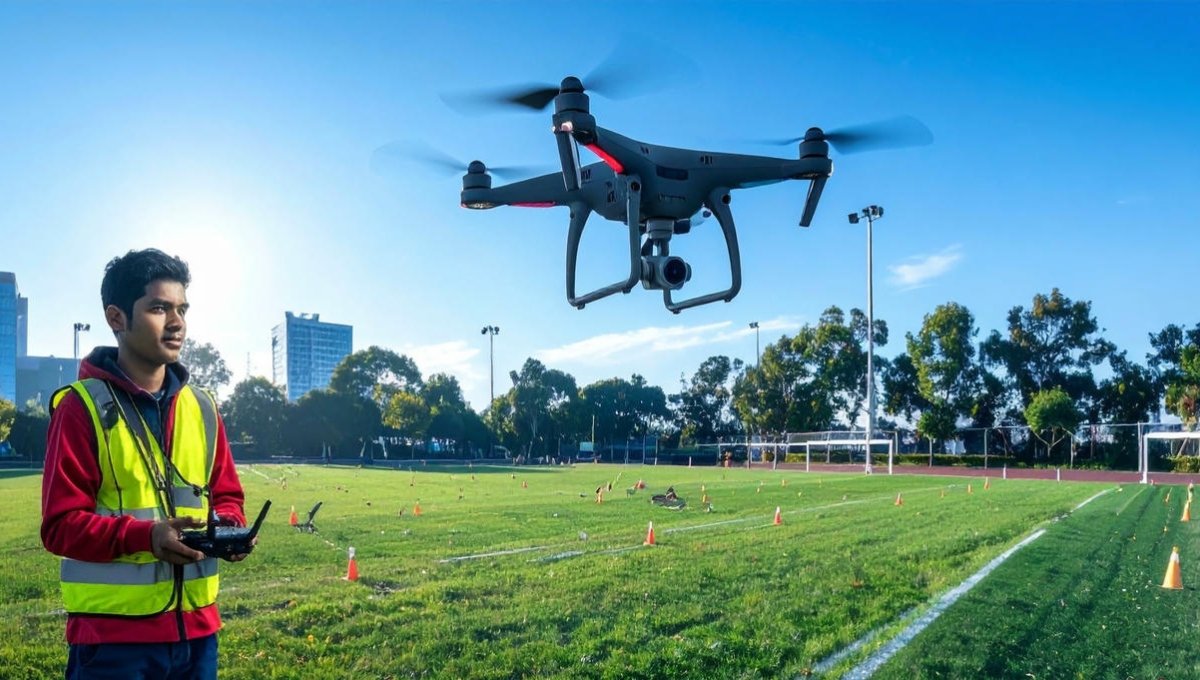
The future of drones is much bigger than aerial photography. As organisations become more comfortable with drone technology, demand can develop across surveying, agriculture, infrastructure, construction, logistics, inspection, mapping, public safety and data-related applications. But the technology is also becoming more sophisticated. That means the future professional may not be someone who only knows how to fly. It may be someone who can fly, collect accurate information, process data, understand the industry problem and deliver a useful result. This is why adding another skill to your drone training can be one of the smartest decisions you make.
Disclaimer: This article is intended for general educational and career-planning purposes only. Drone regulations, eligibility requirements, Remote Pilot Certificate procedures, training syllabi, RPTO authorisations, fees and operational requirements may change. The information in this article is based on official DGCA material and publicly available regulatory information accessed in September 2026, but readers should verify the latest rules, approved RPTO status, scope of authorisation, and certification requirements directly through DGCA before enrolling in any course. Course fees, duration, salary figures and employment opportunities are indicative and can vary significantly depending on the institute, location, specialisation, experience, employer and market conditions. Completing DGCA-authorized training does not guarantee employment, a particular salary or any specific career outcome.