By Viraj • September 9, 2026
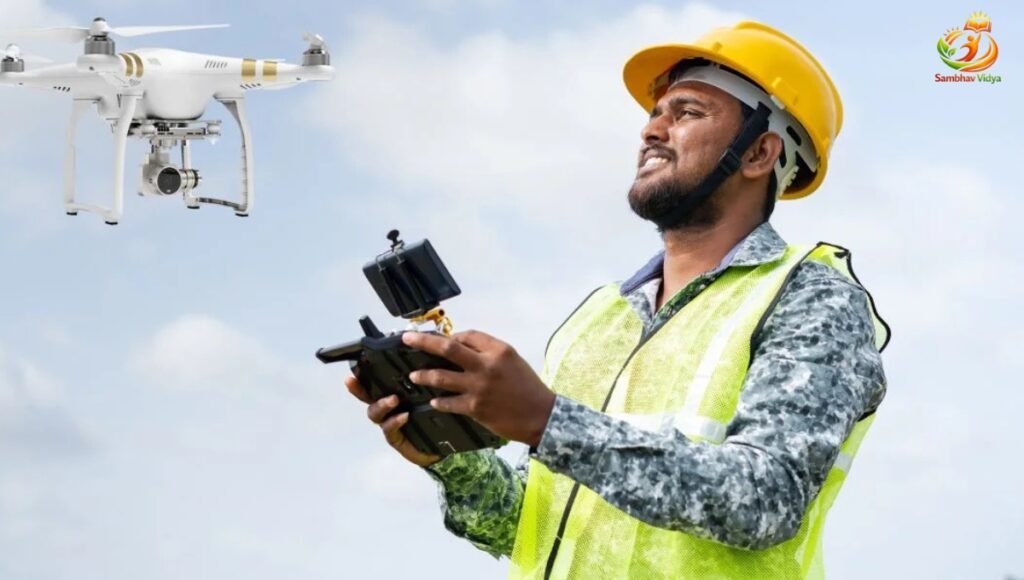
Drone Skills Every Pilot Must Learn in 2026: The first time you hold a drone controller, everything can feel exciting. The aircraft rises, the camera looks down from above, and suddenly the world appears completely different. But there is a big difference between knowing how to fly a drone and being a truly skilled drone pilot.
A professional drone pilot needs patience, technical understanding, safety awareness and the ability to make good decisions under changing conditions. The best pilots are not simply people who can move a drone from one place to another. They understand the aircraft, the environment, the mission and the responsibility that comes with operating an unmanned aircraft.
This is becoming increasingly important in India because drones are now being used for much more than photography. Agriculture, surveying, mapping, construction, infrastructure inspection, disaster management, filmmaking and several government programmes are adopting drone technology.
Government data released in February 2026 reported more than 38,500 registered drones and 39,890 DGCA-certified remote pilots in India, along with 244 approved training organisations.
With more people entering the industry, basic flying ability alone may not be enough to stand out. Pilots who build a wider set of technical and professional skills can be better prepared for the changing drone industry.
So, whether you are a beginner, an aspiring professional or someone who already flies drones, let’s explore the most important drone skills every pilot should learn in 2026.
Everything starts with the fundamentals. Before attempting advanced missions, a pilot needs to feel completely comfortable with basic aircraft controls. This includes take-off, hovering, forward and backward movement, side-to-side movement, turning and landing.
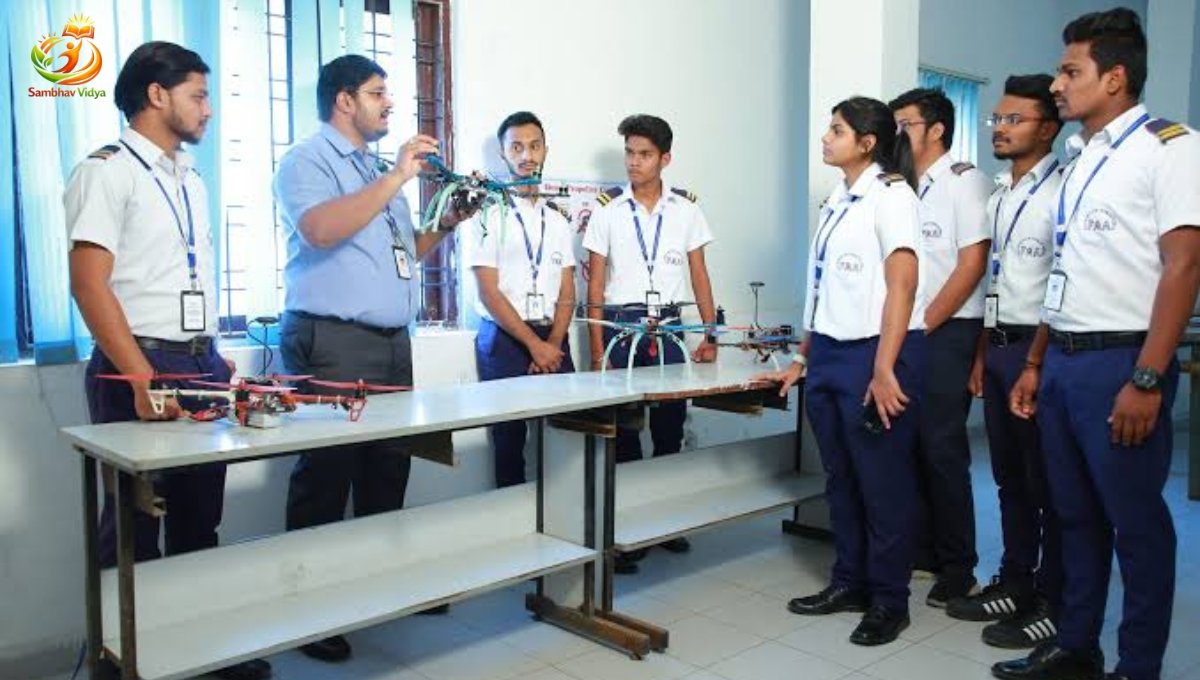
A beginner should practise until these movements become natural rather than constantly thinking about every controller input. You should also understand how the drone reacts differently at various heights, speeds and environmental conditions. The objective is not to fly as quickly as possible. It is to fly smoothly, accurately and safely.
A professional pilot should understand the machine they are controlling.
You do not necessarily need to become an aircraft engineer, but you should know the purpose of major components.
| Drone Component | Why a Pilot Should Understand It |
|---|---|
| Motors | Generate the thrust needed for flight |
| Propellers | Produce lift and affect performance |
| Battery | Determines available flight time |
| GPS | Supports positioning and navigation |
| Flight Controller | Manages aircraft stability and controls |
| Sensors | Help with positioning and obstacle awareness |
| Camera | Captures mission data or imagery |
| Remote Controller | Provides pilot commands |
| Communication System | Connects the aircraft and controller |
This knowledge becomes extremely useful when something does not work as expected.
If a drone suddenly behaves differently, an informed pilot has a better chance of identifying the problem and deciding whether it is safe to continue.
Professional drone operations begin long before take-off.
Flight planning means understanding the purpose of the mission, the area to be covered, expected weather, battery requirements, obstacles, take-off and landing locations and other operational factors.
For mapping projects, flight planning becomes even more important because the drone may need to follow a specific route and altitude.
A good pilot never treats take-off as the beginning of the mission. Preparation is part of the flight.
This is one of the most important skills for anyone who wants to fly professionally.
A pilot needs to understand the rules applicable to the drone and operation they are conducting. This includes awareness of airspace restrictions, operating limitations, permissions where required and other applicable regulatory requirements.
India’s drone framework is administered by the Directorate General of Civil Aviation, and requirements can evolve as the technology develops.
Professional pilots should therefore make a habit of checking current official information instead of relying on old social-media posts or outdated training material.
For people pursuing professional certification, the appropriate DGCA-authorised training route should also be understood.
A drone does not operate in an empty sky.
There may be airports, helipads, restricted areas, temporary restrictions, buildings, power lines, people and other aircraft nearby.
A professional pilot must develop strong situational awareness.
Understanding where you can operate, where additional restrictions may apply and how to maintain safe separation from hazards is essential.
A pilot who focuses only on the drone’s camera view can miss important information around the aircraft.
Weather can completely change a drone flight.
Wind affects stability and battery consumption. Rain can create risks for electronic components. Poor visibility can make visual monitoring difficult.
A professional pilot should therefore check weather conditions before every important operation.
You should develop the habit of looking at wind speed, direction, visibility, temperature and the possibility of rain or storms.
The important skill is not becoming a meteorologist. It is knowing when conditions are suitable for the mission and when it is smarter to postpone the flight.
A drone can be technologically advanced, but it still depends heavily on battery power.
Poor battery management can shorten battery life and, more importantly, create operational risks.
Pilots should learn how to inspect batteries, monitor charge levels, understand expected flight time and plan enough reserve for a safe return.
You should never treat the percentage displayed on a battery as a guarantee of remaining flight time. Wind, payload, temperature and flying style can affect consumption.
Battery safety should become a routine rather than an occasional concern.
A professional pilot should develop a checklist habit.
Before take-off, inspect the drone for visible damage, check propellers, confirm battery status, verify controller connectivity and make sure important systems are functioning correctly.
After the flight, inspect the aircraft again.
Look for loose components, damaged propellers, unusual motor behaviour or other signs of wear.
This simple discipline can prevent small problems from becoming expensive failures.
Even the best preparation cannot eliminate every possible problem.
A drone may lose communication, experience a battery issue, encounter unexpected weather or behave differently from normal.
A skilled pilot does not panic.
Instead, they understand the appropriate emergency procedures and make decisions based on safety.
DGCA’s professional training framework includes risk assessment, safety management and emergency procedures, highlighting how important this knowledge is for professional operations.
Practising emergency scenarios in a simulator can help beginners develop confidence before facing unexpected situations in real flying.
Drone simulators are one of the most useful learning tools available to beginners.
They allow pilots to practise flight controls and manoeuvres without risking physical equipment.
This is especially valuable for FPV pilots, where manual flying can have a steep learning curve.
Simulator practice can help develop muscle memory, improve reaction time and allow pilots to experiment with difficult manoeuvres in a controlled environment.
However, simulation should complement rather than completely replace real-world flying experience.
If you want to work in photography, filmmaking, real estate or content creation, flying is only half the job.
You also need to understand how to create good images.
Composition, camera movement, exposure, framing and storytelling all matter.
A drone pilot who can capture technically correct footage is useful. A pilot who can capture footage that actually tells a story is much more valuable.
For this reason, photographers and filmmakers should learn both drone operation and visual storytelling.
Aerial footage is rarely the finished product.
Clients often want edited videos rather than a folder containing hundreds of raw clips.
Learning basic video editing can therefore become a major advantage.
You do not necessarily need to become a professional editor. But understanding how to organise footage, select good shots, make basic corrections and create a polished final video can improve your value to clients.
For pilots interested in surveying, construction and land mapping, GIS can become one of the most valuable additional skills.
Drone images can be processed into maps, orthomosaics, 3D models and other useful outputs.
Understanding basic GIS concepts and photogrammetry can help a pilot move beyond simply collecting images.
The professional value comes from understanding what the data means and how the customer can use it.
Modern drones can carry far more than standard cameras.
Depending on the platform, drones may use thermal cameras, multispectral sensors, mapping cameras and other specialised payloads.
A professional pilot should understand what the payload is designed to accomplish and how it affects flight operations.
For example, an agricultural operation may use different sensors from an infrastructure inspection project.
Understanding payloads can open the door to specialised and potentially higher-value drone work.
You don’t need to become a full-time technician, but every serious pilot should know basic maintenance. Replacing propellers, checking motors, cleaning equipment, inspecting batteries and identifying obvious faults are useful skills.
A pilot working far from a service centre cannot always wait for someone else to solve a minor problem.
Basic troubleshooting can save time and reduce unnecessary downtime.
This skill is often underestimated. A professional drone pilot may work with engineers, farmers, surveyors, filmmakers, project managers, clients or government teams. You need to understand what they want and communicate what the drone can realistically deliver. Before a mission, ask clear questions about the objective. After the mission, explain what was captured, what limitations existed and whether any additional work is required. Good communication builds trust.
A drone can generate huge amounts of information. Photos, videos, mapping files and sensor data need to be organised properly. A professional pilot should know how to transfer files safely, create backups, organise folders and maintain project records. For business clients, data management can be just as important as flying. Losing important footage because it was stored carelessly can damage a professional relationship very quickly.
Not every drone mission is the same.
A pilot working in agriculture needs to understand agricultural workflows. A construction pilot needs to understand site requirements. An inspection operator needs to understand the structure being inspected.
This means the best long-term strategy is to develop a specialisation.
| Specialisation | Skills That Add Value |
|---|---|
| Agriculture | Crop knowledge, spraying operations |
| Surveying | GIS, photogrammetry |
| Construction | Site monitoring |
| Inspection | Technical inspection knowledge |
| Filmmaking | Cinematography, editing |
| FPV | Manual flying, simulator practice |
| Mapping | GIS and data processing |
| Real Estate | Photography and editing |
| Disaster Response | Situational awareness |
Safety should be at the centre of every drone operation. A pilot must consider people, property, aircraft, weather, equipment and the surrounding environment. Before every flight, think about what could go wrong and what you will do if it happens. Risk assessment should not be treated as paperwork. It is a practical way of thinking that can help prevent accidents.
Professional drone training frameworks specifically include risk assessment, safety management and emergency procedures because these skills are essential for responsible operations.
If you want to become an independent drone operator, flying skills alone will not build a business. You also need to understand pricing, client communication, marketing, contracts, project planning and basic financial management. Instead of saying, “I can fly a drone,” learn to explain what problem you can solve.
A construction company may need progress monitoring. A farmer may need agricultural drone services. A real estate company may need property videos. Customers are usually buying the result, not the flight itself.
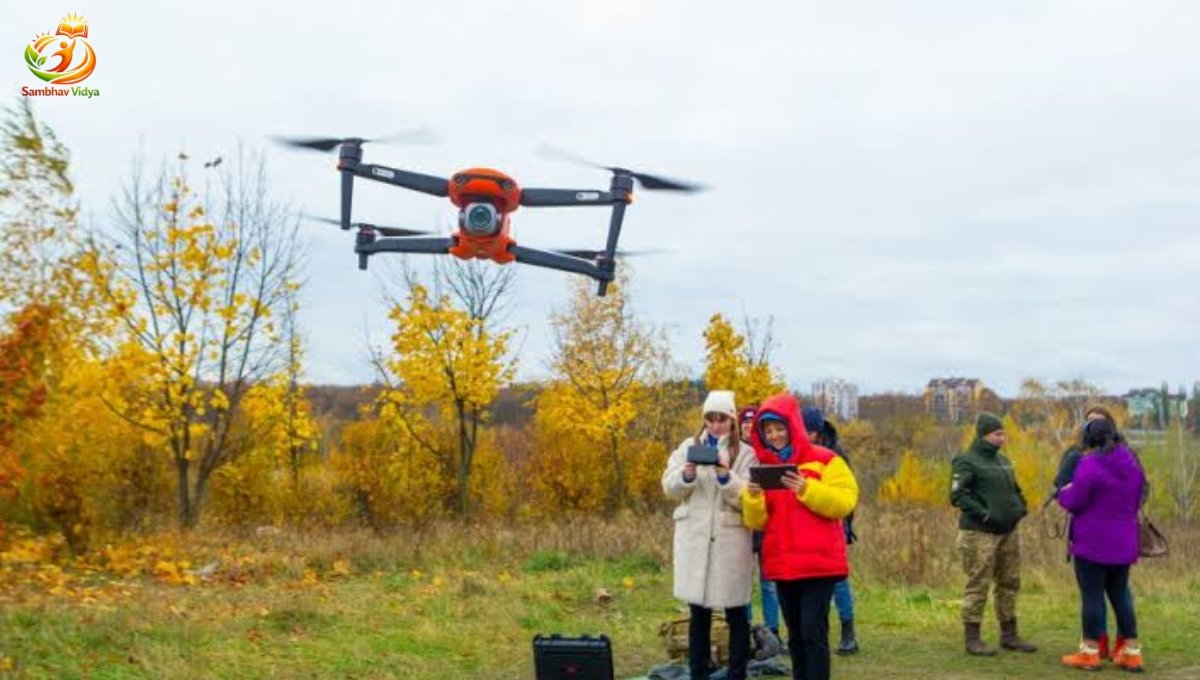
Becoming a skilled pilot takes practice. Start with basic flying and gradually increase the complexity of your missions. Use simulators when appropriate. Practise emergency scenarios. Learn your equipment. Keep records of your flights and mistakes.
Don’t be afraid to repeat basic exercises. In aviation, consistency is often more valuable than flashy manoeuvres. As your confidence improves, choose a specialisation and develop the skills associated with it.
If you want to build a serious career, think of your skills as a combination rather than separate abilities.
For example:
Drone flying + GIS = Surveying specialist
Drone flying + agriculture = Agricultural drone operator
Drone flying + cinematography = Aerial filmmaker
Drone flying + engineering = Inspection specialist
Drone flying + FPV + filmmaking = FPV cinematographer
This combination can help you stand out in a market where more people are learning basic drone operation.
Disclaimer: This article is intended for general educational and informational purposes only. Drone regulations, DGCA requirements, certification procedures, operational restrictions, training standards and industry practices may change over time. Pilots should verify the latest applicable requirements through official DGCA sources before conducting professional or commercial drone operations. The skills and career paths discussed in this article do not guarantee employment, income or business success.