By Viraj • September 7, 2026
How to Get A Drone License in India: Have you ever watched a drone smoothly fly over a field, construction site or beautiful landscape and wondered whether you could turn that skill into a career? You absolutely can explore it, but professional drone flying in India is not simply about buying a drone and learning to operate its remote control.
For people who want to fly drones professionally, understanding India’s regulatory system is extremely important. Depending on the type of drone and operation, you may need the appropriate training, certification, registration and permissions. The professional certification route is generally associated with a Remote Pilot Certificate (RPC), obtained after completing the applicable training through a DGCA-authorised Remote Pilot Training Organisation, or RPTO.
India’s drone ecosystem has grown rapidly. According to government data released in February 2026, the country had more than 38,500 registered drones, 39,890 DGCA-certified remote pilots and 244 approved Remote Pilot Training Organisations.
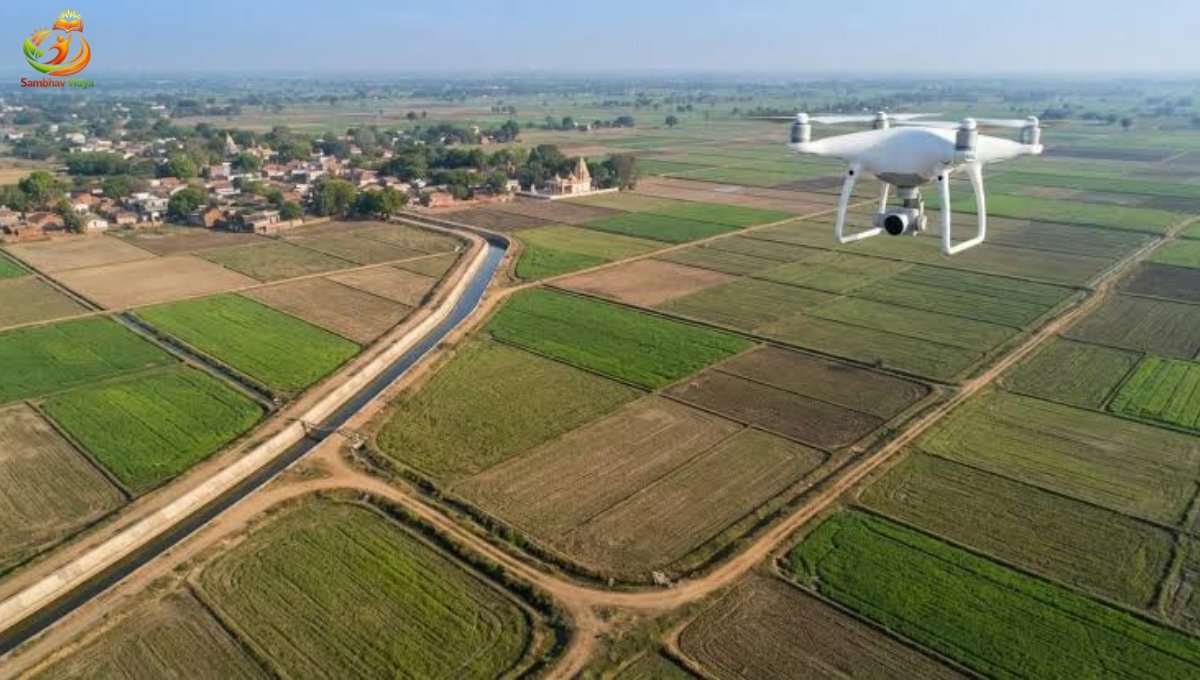
That growth tells an important story. Drone flying is moving from a hobby into a genuine professional skill. Agriculture, surveying, construction, infrastructure inspection, filmmaking, disaster management and several government programmes are already using drones.
So, if you are asking, “How can I get a drone license in India?”, this complete guide will walk you through eligibility, training, documents, fees, certification, the admission process and the mistakes you should avoid.
The term “drone license” is commonly used by people, but India’s professional drone certification system uses the term Remote Pilot Certificate (RPC). Under the Drone Rules framework, an authorised Remote Pilot Training Organisation is responsible for providing remote pilot training to individuals seeking an RPC. DGCA’s training framework defines an RPTO as an organisation authorised to provide such remote pilot training. In simple words, if you want to become a professionally trained drone pilot, you should not assume that completing any random drone-flying course automatically gives you the required professional certification.
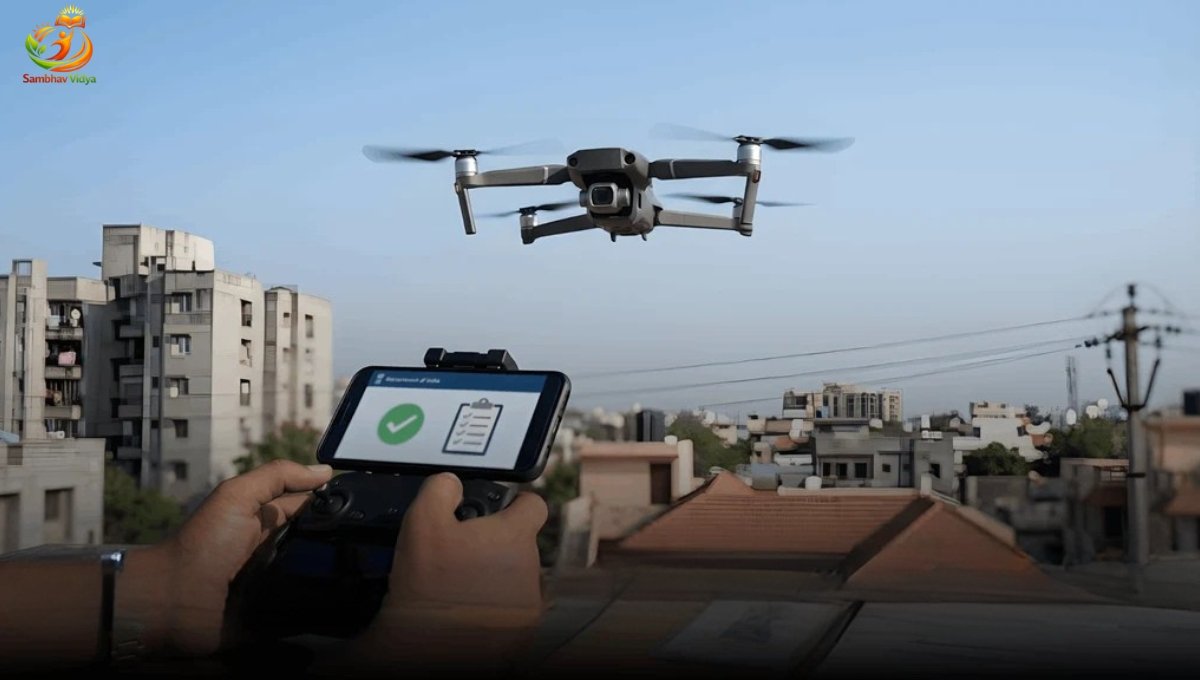
A short workshop may teach you how to fly. An FPV course may teach you racing or cinematic flying. A photography course may teach aerial camera techniques. These can all be useful skills, but they are not automatically the same as DGCA-authorised remote pilot training. This distinction is one of the most important things a beginner should understand before spending money on a course.
Whether you need certification depends on the nature of your drone and operation. India’s drone regulations classify unmanned aircraft systems based on their maximum all-up weight, and the applicable regulatory requirements depend on the operation.
For someone planning a professional career in areas such as agriculture, surveying, inspection or commercial drone services, completing an appropriate DGCA-authorised training route is an important step.
The safest approach is to check the current DGCA requirements for your particular drone category and intended operation rather than relying on old information found on social media or private websites.
The official DGCA drone portal currently provides information on RPTO Approved Scope, allowing candidates to verify training organisations and their approved training scope.
The exact eligibility requirements can depend on the applicable training programme and current regulations. However, current professional training programmes provide a useful example.
For instance, IGRUA’s current DGCA-certified drone training programme lists the following prerequisites for Remote Pilot Certificate training:
| Eligibility Requirement | Current Example |
|---|---|
| Minimum Education | Class 10 pass |
| Minimum Age | 18 years |
| Identity | Aadhaar Card |
| Secondary ID | Voter ID, Ration Card, Driving Licence or Passport |
| Medical Requirement | Medical Fitness Certificate |
| Training | Through applicable authorised training route |
IGRUA currently lists five-day DGCA-certified RPAS training at several locations, including Gurugram, Gwalior, Bhopal, Kangra/Dharamshala, Bengaluru and Coimbatore.
However, candidates should treat this as an example of a current training provider’s requirements rather than assuming that every programme in India has identical admission conditions.
Getting professional drone certification is easier when you understand the process before you begin.
The first step is to decide what type of drone work you actually want to do. Someone interested in agriculture may need different skills from someone interested in filmmaking, surveying or FPV.
Once you know your objective, identify a training organisation whose current authorisation and scope match the training you need.
Before paying any admission fee, check your age, education and documentation requirements.
For many professional beginner programmes, Class 10 and 18 years of age are common requirements, but always verify the current conditions with the selected RPTO.
This is perhaps the most important step.
Do not choose a training centre simply because its advertisement says “DGCA-approved drone course.”
Check the organisation’s current status and approved scope through official DGCA information. The DGCA website currently maintains an RPTO Approved Scope section.
Also check whether the training centre’s physical location and flying ground correspond to the information disclosed by the organisation.
The institute will generally ask for documents required for registration and training.
Depending on the programme, these may include proof of age, educational qualification, identity documents, photographs and medical fitness documentation.
Keep original documents and clear copies ready so that the admission process does not get delayed.
Professional drone training is not limited to joystick practice.
DGCA’s training framework covers subjects related to aviation law, airspace, principles of flight, meteorology, ATC procedures, safety, maintenance, risk assessment, emergency procedures and payload utilisation.
You should therefore expect a combination of theory, simulator practice and practical flying depending on the approved programme.
After completing the required training, candidates have to meet the applicable assessment and certification requirements of the authorised training route.
The exact assessment process can depend on the current DGCA framework and the scope of the RPTO.
After successful completion of the required training and assessment process, the applicable Remote Pilot Certificate is issued through the prescribed regulatory system. At this stage, you have moved beyond simply being someone who knows how to operate a drone. You have completed a structured professional training pathway.
The duration depends on the type of programme and drone category. A short recreational or skill workshop may last one or two days. Professional remote pilot programmes are generally longer because they include both theory and practical training.
For example, IGRUA currently lists a five-day DGCA-certified drone training programme for applicable rotorcraft categories.
| Training Type | Possible Duration |
|---|---|
| Basic Drone Workshop | 1–3 days |
| Professional Remote Pilot Training | Around 5 days or more |
| Agriculture Drone Training | Usually several days |
| FPV Basic Training | Often 2–3 days |
| Advanced FPV Training | Often 4–5 days |
| Survey & Mapping Training | Depends on syllabus |
| Specialised Training | Depends on application |
Course duration alone should never be used to judge quality. Practical flying exposure, instructor experience, equipment and the approved training scope are equally important.
There is no single nationwide fee that every candidate pays for a drone license.
The total cost depends on the training organisation, drone category, location, course duration and what is included in the programme.
Professional drone pilot courses can cost anywhere from the low tens of thousands of rupees to considerably more for specialised training.
For example, private FPV training programmes currently listed in India can charge around ₹25,000 plus GST for a basic course and around ₹45,000 plus GST for an advanced programme. These are specialised FPV training examples, not the standard price for an RPC.
Similarly, agriculture or professional remote pilot programmes may have different fee structures.
| Cost Component | What It May Include |
|---|---|
| Training Fee | Theory and practical training |
| Simulator | Flight simulation practice |
| Practical Flying | Use of training drones |
| Assessment | Applicable evaluation |
| Certification | Applicable certification-related charges |
| GST | Tax where applicable |
| Accommodation | Extra at some institutes |
| Travel | Usually the candidate’s responsibility |
Before paying, ask the institute for a complete fee breakup. A course advertised at a low price may exclude accommodation, taxes, examination charges or other expenses.
Medical requirements can vary according to the applicable programme and regulatory requirements. Some professional training providers currently list a medical fitness certificate as part of their admission prerequisites. IGRUA, for example, specifically lists a Medical Certificate of Fitness for its Remote Pilot Certificate training.
Candidates should therefore confirm the current medical requirements directly with their chosen RPTO before admission.
A good professional training programme should prepare you for much more than basic flight controls. You may learn how drones work, how to plan a flight, how to understand airspace, how weather affects flight safety and how to react when something goes wrong.
The curriculum can cover areas such as:
This broad knowledge is what separates professional drone operations from casual flying.
For someone seeking the professional Remote Pilot Certificate route, training through the applicable DGCA-authorised system is central to the process.
An online video course, YouTube tutorial or weekend flying session cannot simply replace the prescribed professional training. You can certainly use online resources to understand drone basics before joining an RPTO. In fact, doing so can make classroom learning easier. But it should not be confused with completing the official training pathway.
Obtaining your certification is not the end of your learning. In many ways, it is the beginning.
Once you have the required credentials and skills, you can explore several career areas.
| Career Field | Possible Work |
|---|---|
| Agriculture | Spraying and crop monitoring |
| Surveying | Mapping and aerial surveys |
| Construction | Site progress monitoring |
| Infrastructure | Inspection and documentation |
| Filmmaking | Aerial cinematography |
| Real Estate | Property photography |
| FPV | Racing and cinematic flying |
| Disaster Management | Damage assessment |
| Training | Drone instruction |
| Entrepreneurship | Drone service business |
India’s growing drone ecosystem is creating opportunities in several of these areas. Government programmes have already used drones extensively for village mapping, agriculture and public-service applications. Under the SVAMITVA scheme, 3.28 lakh villages had been surveyed using drones, according to government data released in February 2026.
Many students choose drone training because they want to build a career, but there is no guaranteed salary after receiving a certificate. Entry-level drone pilots may earn differently depending on location and employer. Experienced professionals with specialised skills in agriculture, surveying, GIS, inspection, filmmaking or data processing can potentially command higher compensation. The biggest advantage comes from combining flying ability with another professional skill.
For example, a person who knows both drone flying and GIS can work on mapping projects. Someone who understands agriculture can become more useful in crop-monitoring and spraying operations. A filmmaker who is also an excellent FPV pilot can offer specialised aerial content. In other words, the certificate opens a door, but your skills determine how far you can walk through it.
Yes, drone technology also offers opportunities for entrepreneurship. Instead of working permanently for an employer, experienced operators can build businesses around specific services such as agriculture, aerial photography, surveying, construction monitoring or inspection.
However, running a drone business involves much more than owning a drone. You need to understand applicable regulations, client requirements, safety procedures, insurance or contractual considerations where relevant, equipment maintenance, data handling and business operations. Starting small and specialising in one service can be a sensible way to build experience.
Choosing the training organisation deserves as much attention as choosing the course itself. A candidate should verify the institute’s current DGCA authorisation, approved scope, training location and practical facilities. DGCA has also emphasised public disclosure by RPTOs, including details such as authorisation number, scope, validity, addresses, flying ground, UAS and simulator information.
The official DGCA website currently provides an RPTO Approved Scope section for this purpose.
Before admission, compare at least these factors:
| Factor | Why It Matters |
|---|---|
| DGCA Authorisation | Confirms the relevant regulatory status |
| Approved Scope | Shows what training is authorised |
| Practical Flying | Builds real operational confidence |
| Flying Ground | Important for hands-on training |
| Instructors | Affects training quality |
| Equipment | Determines practical exposure |
| Simulator | Useful for safe practice |
| Safety Training | Essential for professional operations |
| Fee Transparency | Prevents unexpected expenses |
| Location | Affects travel and accommodation costs |
This difference often creates confusion. A private institute may give you a certificate saying that you completed its drone course. That certificate can demonstrate training or skill development. A Remote Pilot Certificate is part of the regulated professional certification framework.
Therefore, never assume that every certificate carrying the words “drone pilot” or “drone training” is equivalent to an RPC. Always ask the training provider exactly what certificate you will receive and under which authority it is issued.
The government is also expanding drone-related skill development. In March 2026, the Ministry of Skill Development and Entrepreneurship announced drone technology training initiatives through the Directorate General of Training. The initiative includes Drone Technician and Drone Pilot (Junior) courses across selected ITIs, while NSTI Ramanthapur, Hyderabad, has been authorised as an RPTO by DGCA. This is important because it shows that drone skills are entering mainstream vocational education rather than remaining limited to private training centres.
The biggest mistake is choosing a course based only on an attractive advertisement. A second common mistake is paying the entire fee without understanding what the course actually includes. Another mistake is assuming that buying an expensive drone will automatically make you a professional pilot. Technology changes quickly, and regulations can change too. A responsible pilot should therefore develop the habit of checking official information and keeping their knowledge updated. Most importantly, never fly in a way that violates applicable aviation or drone regulations simply because someone says that “everyone does it.”
Disclaimer: This article is intended for general educational and informational purposes only. Drone laws, DGCA requirements, Remote Pilot Certificate procedures, eligibility criteria, training fees, RPTO authorisations and operational restrictions may change over time. Candidates should verify the latest requirements directly through the official DGCA and Digital Sky platforms and with their chosen authorised training organisation before enrolling or conducting any professional drone operation. The fee figures and training examples mentioned in this article are indicative and should not be treated as guaranteed or nationally fixed prices. Completion of a drone training course or obtaining an RPC does not guarantee employment, income or business success.